The Financial Sector Conduct Authority’s 18-year debarments of former Regiments Capital senior officials Eric Anthony Wood and Magandheran Niven Pillay have brought a long-running chapter in the state capture saga back into the financial services spotlight.
The debarment orders, dated 30 July 2026, relate to the same enforcement matter and were issued under section 153 of the Financial Sector Regulation Act, alternatively section 14A of the FAIS Act.
The FSCA told Moonstone that its investigation, together with its consideration of the findings of the State Capture Commission, established that Wood and Pillay, in their capacities as senior officials of Regiments Capital and Regiments Fund Managers between 2009 and 2016, engaged in a pattern of conduct that conflicted with the standards and statutory requirements applicable to such officials.
The evidence, the FSCA said, included improper payment arrangements, unlawful revenue-sharing, and procurement practices.
The Authority concluded that the conduct adversely affected the two men’s fitness and propriety, particularly the requirements of honesty and integrity applicable to key persons within institutions operating in the financial services sector.
Wood and Pillay were senior officials of both Regiments Capital (Pty) Ltd, a Category I financial services provider (FSP 16831) whose licence lapsed on 18 November 2020, and Regiments Fund Managers (Pty) Ltd, a Category II FSP (FSP 22302) whose licence was withdrawn by the FSCA on 12 June 2020.
Both men were given an opportunity to comment on the investigation findings and regulatory action before the debarment orders were issued. Neither has indicated an intention to challenge the orders.
The FSCA said it has not, at this stage, acted against other former directors or key individuals associated with Regiments Capital in relation to the same matter.
The FSCA declined to comment on whether the debarments are connected to the criminal proceedings involving Wood and Pillay arising from allegations concerning Regiments Capital and Transnet. Those allegations are detailed in the Zondo Commission’s final report.
The state capture connection
It has been several years since the extent of South Africa’s state capture became clear, but its repercussions continue to be felt. The allegations centred on the use of political influence and corrupt relationships to manipulate state institutions and public procurement for private gain, with state-owned companies such as Transnet, Eskom, and South African Airways at the centre of much of the evidence.
The scale of the allegations led to the establishment in January 2018 of the Judicial Commission of Inquiry into Allegations of State Capture, Corruption and Fraud in the Public Sector, chaired by then Deputy Chief Justice Raymond Zondo. The Zondo Commission spent more than four years hearing evidence before completing its final report in 2022.
Regiments Capital featured prominently in the Commission’s examination of state-owned companies, particularly Transnet. Its findings included procurement irregularities, conflicted arrangements, and substantial advisory fees, and led to recommendations for further investigation and possible prosecution.
The Commission made findings about the conduct it examined; it did not determine the criminal guilt of Wood, Pillay, or Regiments. That was left to the investigative and prosecutorial authorities.
A history of Transnet transactions
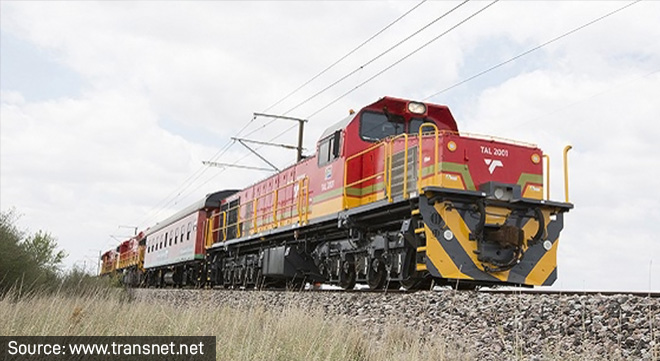
It started with 1 064 locomotives.
In July 2012, Transnet appointed McKinsey & Company to provide transaction advisory services for the procurement. Regiments Capital was not part of the original consortium. It was brought into the arrangement later, and the Zondo Commission found that its appointment had not followed the required procurement process.
By early 2014, Regiments had effectively taken over McKinsey’s role. On 23 January, Transnet group chief financial officer Anoj Singh concluded a contract with Regiments. Less than two weeks later, he signed an addendum with McKinsey purporting to transfer McKinsey’s rights to Regiments.
The Commission found that the cession was invalid.
Regiments received R36.77 million, followed by another R79.23m on 30 April 2014. The Commission found that the latter payment had no legal basis.
The details of the locomotive procurement and Regiments’ involvement are set out in Part II, Volume I of the Zondo Commission’s final report, which deals specifically with Transnet.
Then came the financing.
A US$2.5-billion China Development Bank facility was negotiated to help fund the locomotive procurement, although Transnet ultimately drew down US$1.5bn. Regiments received R189.24m in connection with the financing, despite evidence that it had already been remunerated for the work.
Of that amount, R147.6m was paid to Albatime, a Gupta-linked entity. About R122m then flowed to Sahara Computers.
Wood’s involvement resurfaced in a R12bn club loan – a loan arranged by a group of banks – as part of the financing for Transnet’s R54bn purchase of 1 064 locomotives.
Regiments had initially been involved in arranging the loan. But Wood had since left Regiments and helped to establish Trillian Capital. Trillian was proposed as lead arranger, replacing JP Morgan.
It ultimately received a R93.48m success fee.
The Commission heard that the original proposal had been for Regiments to receive R50.2m. Transnet officials had already questioned whether Regiments had been paid for work that Trillian was now being remunerated to perform.
The Commission also noted that Trillian was newly established and that Wood had helped to create it. It recommended further investigation into the appointment, including whether a Range Rover had been offered as an inducement to former Transnet group treasurer Phetolo Ramosebudi.
The R229m and the swaps
The money trail moved beyond transaction advisory work and into Transnet’s pension fund.
Regiments Fund Managers was appointed to manage assets for the Transnet Second Defined Benefit Fund (TSDBF), while Regiments Capital advised Transnet on interest-rate transactions. The Commission examined the potential conflict created by Regiments-linked entities operating on different sides of transactions involving Transnet and its pension fund.
Among these were interest-rate swaps linked to the R12bn club loan.
In December 2015, Regiments executed a swap on R4.5bn of the loan at a fixed rate of 11.83% for 15 years. In March 2016, a further R7.5bn was swapped at 12.27%, also for 15 years.
The Commission found that the swaps should never have been concluded. By 2019, they had produced a realised negative cash flow of R850.5m for Transnet. By May 2019, exiting the swaps would have added another R918.48m, taking the negative cash flow to about R1.83bn.
Another set of swaps involved R11.3bn of Transnet debt, with the TSDBF acting as counterparty. The Commission found a further R720.8m realised loss for Transnet, with an additional unrealised loss of R815.7m at the time of its assessment.
Regiments received R229m in fees for these transactions.
The Commission’s findings on the swaps, the losses and the role of Regiments Fund Managers are set out in Part II, Volume I of its final report. Its corresponding recommendations appear in Part VI, Volume IV – All the Recommendations.
Recommendation 104 called for further investigation, with a view to possible prosecution, of Ramosebudi, Wood, Regiments Capital, Regiments Fund Managers, and others in relation to the transactions.
The recommendation referred to the more than R1.5bn in realised losses suffered by Transnet and the R229m in fees paid to Regiments Fund Managers. It identified potential offences including fraud, corruption, racketeering, offences relating to the proceeds of unlawful activity and, where appropriate, contraventions of the Public Finance Management Act (PFMA).
It went beyond Transnet
Regiments also featured in the Commission’s examination of other state-owned entities.
At SAA, the Commission found that a Regiments/McKinsey consortium secured a contract through what it described as a corrupt relationship between Wood and Ramosebudi. It found no evidence that McKinsey knew about the relationship.
At Airports Company South Africa, the Commission examined interest-rate swap transactions involving Regiments, Wood, and Pillay. It found that more than R50m in additional fees had been extracted at ACSA’s expense and recommended that Wood, Pillay, and Ramosebudi be investigated for corruption.
Those findings, and the Commission’s recommendations arising from them, are contained in Part VI, Volume IV of the final report.
The court case
The Zondo Commission’s findings were followed by a National Director of Public Prosecutions (NDPP) application to preserve assets linked to the alleged proceeds of the transactions.
In 2019, the NDPP obtained a provisional restraint order against Wood, Pillay, Regiments Capital co-founder and former director Litha Nyhonyha, and the Regiments companies, initially seeking to preserve assets worth about R1.108bn.
The High Court later considered evidence concerning, among other things, the alleged arrangements under which Regiments shared revenue from Transnet contracts with Salim Essa and Kuben Moodley, businessmen linked to the Gupta family. The Court found reasonable grounds to believe that the underlying agreement could be found corrupt and that Wood, Pillay, and Nyhonyha had implemented it.
The Court also examined the close to R229m that moved from Regiments Fund Managers to Regiments Securities and was subsequently channelled through Albatime to Moodley and other Gupta-linked entities.
In May 2022, the Court increased the restraint amount to R1.685bn. The order was adjusted to take account of R639.1m that Regiments had paid to the TSDBF.
The court’s findings and final order are set out in the May 2022 judgment in National Director of Public Prosecutions v Wood and Others.
The proceedings were about preserving assets, not determining criminal guilt. Wood, Pillay, and the other defendants were not convicted in the restraint proceedings.
The matter then moved into the criminal courts.
The criminal case
In August 2022, the National Prosecuting Authority (NPA) charged Wood, Pillay, Nyhonyha, Regiments Capital, and others over the Transnet transaction advisory tender. The charges included fraud, corruption, money laundering and contraventions of the PFMA.
At the centre was the 2012 appointment of the McKinsey-led consortium to advise Transnet on the procurement of 1 064 locomotives. The NPA alleged that Regiments was irregularly brought into the arrangement and that the contract was subsequently expanded to more than R305m. The charges also extended to the China Development Bank and club-loan financing arrangements, as well as the R93.4m paid to Trillian Asset Management.
The case has moved slowly. By January 2025, 15 accused were before the court, and the matter had been postponed to 2 February 2026 for trial.
That date came and went without the trial getting under way. The Citizen reported in July 2026 that the matter remained outstanding, with Wood, Pillay, and the other remaining accused still facing charges arising from the Transnet transaction advisory contract. The State was then looking towards a 2027 trial start.
Charges against McKinsey and Trillian Asset Management were withdrawn before either case went to trial.
Separately, in December 2024, the NPA reached a Corporate Alternative Dispute Resolution agreement with McKinsey Africa, under which the company paid R1.115bn into the Criminal Assets Recovery Account.
With the FSCA’s debarments now in place, Wood and Pillay are barred from acting as key individuals of an FSP or providing financial services as representatives. The criminal cases, however, are still unresolved.