
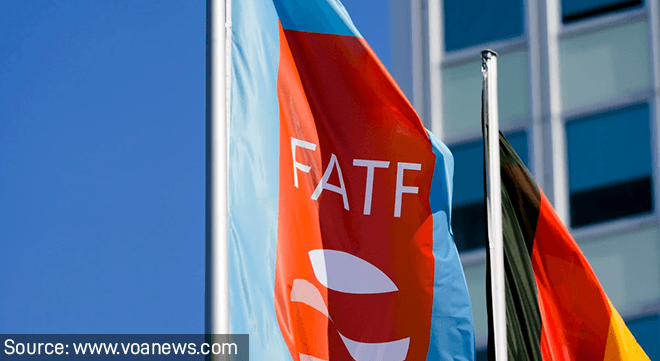
Preparations have begun for the Financial Action Task Force’s next mutual evaluation of South Africa, which is expected to start next year, says National Treasury.
The global financial crime watchdog on Friday removed South Africa from its list of jurisdictions under increased monitoring – known as the grey list.
The removal was expected because the FATF announced in June that South Africa had substantially completed all 22 items on an action plan drawn up to address eight key strategic deficiencies in South Africa’s anti-money laundering (AML) and counter-financing of terrorism (CFT) system.
In July, the Africa Joint Group conducted an on-site assessment to verify that the country had addressed its action plan. Following the visit, the Group submitted a report to this month’s FATF plenary recommending South Africa’s removal from the grey list.
South Africa was one of four countries – all of them in Africa – that were removed from the grey list following the FATF’s plenary meetings in Paris from 22 to 24 October. These countries are Burkina Faso, Mozambique, and Nigeria. No countries were added to the list.
South Africa was placed on the grey list in February 2023 after the FATF conducted a mutual evaluation in November 2019 and published its mutual evaluation report in October 2021.
The FATF conducts peer reviews, or mutual evaluations, of its members and other jurisdictions to assess their compliance with the organisation’s recommendations, or standards. These evaluations examine both the technical compliance of a country’s laws and the effectiveness of their implementation.
The fifth round of mutual evaluations began last year. It uses a revised methodology, adopted in 2022, that places an even greater emphasis on the effectiveness of a country’s AML, CFT, and counter-proliferation financing (CPF) systems.
“A country must demonstrate that, in the context of the risks it is exposed to, it has an effective framework to protect the financial system from abuse. There will also be a greater emphasis on the major risks and context. This will ensure that countries, and the assessors reviewing them, focus on the areas where the risks are highest, not just lower-risk areas where it is comparatively easier to launch investigations and secure convictions,” according to the FATF’s website.
Under the new procedures, a country that fails to address deficiencies within three years of its mutual evaluation report will automatically face stricter measures.
‘An important milestone’
National Treasury, the Financial Intelligence Centre (FIC), and the South African Revenue Service issued statements on Friday welcoming the FATF’s decision to remove South Africa from the grey list.
Treasury said delisting was an important milestone and a demonstration of the country’s commitment to rebuilding the rule of law.
South Africa’s progress in addressing AML/CFT deficiencies and exiting the grey list represented “a major policy and institutional achievement for the people of South Africa, particularly following the weakening of key law enforcement and other institutions during the state capture era”.
The FIC’s acting director, Pieter Smit, said the decision was the end of a difficult but critical chapter in the evolution of South Africa’s regime to combat money laundering, the financing of terrorism, and the financing of the proliferation of weapons of mass destruction.
SARS said exiting the grey list was “a significant moment” for the country, and “a testament to the whole-of-government approach and its institutions to restore the integrity of our financial system”.
Although South Africa’s greylisting was a consequence of systemic weaknesses aggravated during the era of state capture, “SARS is acutely aware that it, along with other key institutions, was impacted and must continue to play a crucial role in preventing any future regression”.
No let up in supervision and enforcement
South Africa’s removal from the grey list does not signal a relaxation of regulatory oversight and enforcement in the AML/CFT realm. Instead, the regulatory authorities will maintain and build upon the measures implemented during the greylisting period.
Treasury said delisting was only the start of a broader process to continue to strengthen key institutions, improve enforcement and governance processes, and ensure that such improvements are sustainable, and that the country’s systems become increasingly effective in combating money laundering, terrorism financing, and proliferation financing.
“Neither government agencies nor regulated entities in the private sector can afford to become complacent and stop improving. Instead, through public-private collaboration, they must continue to strengthen the AML/CFT system.”
Treasury said the FATF requires countries that have exited the grey list to demonstrate continued commitment through measurable outcomes, including successful investigations, prosecutions, and sanctions as they relate to AML/CFT. These actions will form the basis of the next mutual evaluation, which is expected to start in the first half of 2026 and conclude in October 2027.
“To prevent being placed back on the grey list, it is important that systems of monitoring and enforcement work more efficiently and effectively, and that there are no gaps, by the time of the mutual evaluation. Preparations, in this regard, have already begun, and we remain confident that South Africa will be able to sustain the progress made.”
Smit said the country’s removal from the grey list did not mark the end of the fight against financial crime but laid the foundation for the next phase “as we draw lessons from this experience”.
“Exiting the grey list is half the battle won, and one that must continue. The FIC will continue to enhance its abilities to contribute to the fight against financial crime.”
He said the FIC made a significant contribution to the concerted effort by a range of roleplayers to tackle the deficiencies in the country’s AML/CFT regime.
One area was building the capability to conduct supervision of compliance with the Financial Intelligence Centre Act (FICA) by designated non-financial businesses and professions. This entailed developing and implementing tools to gather risk-related information and to analyse the information submitted by accountable institutions.
Another area was the FIC’s increase in engagements and collaboration with law enforcement, which resulted in an increase in requests for and the use of financial intelligence in money laundering and terrorist financing investigations and prosecutions. The FIC made effective use of its powers to obtain additional information from reporting entities to follow the money and trace criminal proceeds, Smit said.
SARS Commissioner Edward Kieswetter said exiting the grey list was not a finish line, “but a milestone on a long-term journey towards building a robust and resilient financial ecosystem”.
SARS was committed to upholding “the highest standards of financial integrity”. As the next mutual evaluation approaches, “SARS will work relentlessly to ensure that we do what is required to combat the illicit economy,” Kieswetter said.
Webber Wentzel said in a commentary it expects the enhanced scrutiny and compliance standards that were developed during the greylisting period to remain.
It is evident that the FIC will continue to address financial crime and implement measures to strengthen South African’s AML frameworks, wrote Lenee Green, Lerato Lamola, and Michael Denega, who are partners at the law firm.
The regulatory authorities are continuing to build the necessary capacity to investigate entities across all industries. They have imposed various penalties since 2023, focusing on accountable institutions in the financial services industry, including banks, insurers, asset managers, and financial services providers.
Green, Lamola, and Denega outlined several expectations for ongoing regulation and enforcement. These include:
- A continued focus on ensuring enhanced Risk Management and Compliance Programmes that meet the requirements of FICA.
- Practical methods of implementation, not purely theoretical or tick box compliance.
- Addressing risk exposures to prevent financial crimes.
- Training and awareness to improve understanding of AML/CFT/CPF measures.
- Engagement with all stakeholders to combat financial crime collectively.
- Effective prosecution.




Hello, I need to enrol with you
Hello
Enrolments are done with MBSE, https://www.mbse.ac.za/
Please send an email to help@mbse.ac.za
FETC/QCTO Qualifications – learning@mbse.ac.za
Short Courses (FICA, NCA, CIMA) – assist@mbse.ac.za
Class of Business (COB)- cob@mbse.ac.za
Continuous Professional Development (CPD) – cpd@mbse.ac.za