

Retirement is supposed to be the reward for a lifetime of work. But what happens when people need their pensions for longer, while the generations expected to fund them are getting smaller?
That is the demographic squeeze facing pension systems around the world. People are living longer, birth rates are falling, and the balance between those earning an income and those drawing retirement benefits is changing.
The 2026 Marsh CFA Institute Global Pension Index projects that, over the next 30 years, the number of people aged 70 and older in more developed regions will rise from 23% to 37% relative to the population aged 20 to 69. Put another way, the number of potential workers for every older person is expected to fall from 4.3 to 2.7.
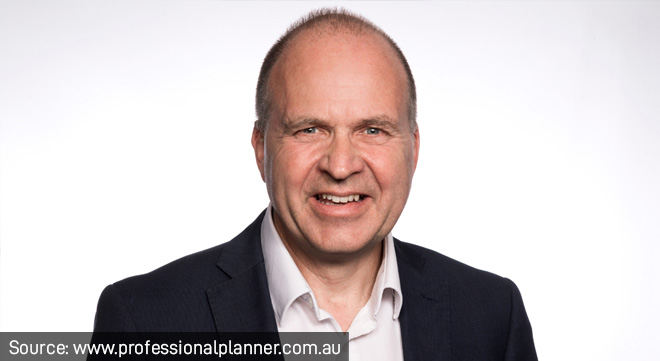
Tim Jenkins (pictured), a partner at Marsh People and Investments and lead author of the Index, identifies rising life expectancy and falling fertility rates as key drivers. Together, they are putting pressure on the arrangements governments, employers and individuals have relied on to provide retirement income.
Retirement is getting longer
A pension may have to support someone for 20, 30 or even 40 years after they stop working. That is a substantial period to fund, particularly when the number of people contributing to a system is no longer keeping pace with the number drawing benefits.
Life expectancy has changed markedly since 1950. At age 65, it has increased by 14 years in South Korea and 11.2 years in Hong Kong SAR.
Across more developed regions, life expectancy at age 65 has increased by 50.9% to 20 years. At age 80, it has risen by 68.8% to 10 years.
These figures do not mean everyone will spend that long in retirement. They show how much longer retirement income may need to last – and why pension systems designed around shorter retirements face a different set of demands today.
The challenge is not simply that people are living longer. It is that fewer children are being born to become tomorrow’s workers and contributors.
Of the 55 retirement income systems assessed by the Index, 43 have fertility rates below the replacement level of 2.1 children per woman, while 23 have rates below 1.5. In 2023, rates ranged from 0.72 in Hong Kong SAR and South Korea to 3.2 in Namibia and Kenya.
Smaller generations entering the workforce can mean fewer people supporting a growing number of retirees. Productivity growth, later retirement and immigration can help ease the pressure, the report says, although the effect of migration differs between countries.
Who pays when the balance shifts?
Across the 27 OECD (Organisation for Economic Co-operation and Development) members covered by the Index, public expenditure on old-age and survivors’ benefits increased by an average of 1.5 percentage points of gross domestic product between 2000 and 2023.
For 23 OECD members, the OECD projects a further average increase of 0.7 percentage points of GDP in public pension expenditure over the next 20 years. The picture is not the same everywhere: five of the 27 countries recorded a decrease over the period examined, while six of the 23 are projected to reduce pension expenditure over the next two decades.
Where public pensions are largely funded from current tax revenues or contributions, a shrinking pool of workers relative to retirees can leave governments facing difficult choices. They may need to raise contributions or taxes, adjust benefits, change retirement rules or combine several measures.
Those choices are not just financial. They can pit the expectations of one generation against the realities facing another.
Jenkins describes a tension between older people who expect the pension arrangements they planned around to remain intact and younger people who are already struggling with the cost of living.
“The baby boomers saying, ‘Well, I’ve got my pension; you can’t take it away,’ whereas the younger generations are saying, ‘Well, I can’t even afford my cost of living today. How can you spend all this money on older generations?’”
That leaves governments with a political problem that becomes harder to resolve the longer reform is delayed. The Index acknowledges that changing pension benefits or retirement rules can unsettle people who have organised their finances around existing arrangements. But leaving those arrangements untouched does not make the demographic pressure disappear.
The consequences also depend on how a pension system works. Some countries rely heavily on public pensions funded from current revenue. Others combine public provision with mandatory occupational or private savings. How much pressure they face depends partly on how benefits are financed and how widely retirement saving is shared across the workforce.
Working longer is not an option for everyone
One way to ease the pressure is to extend working lives. People who work for longer may have more time to contribute to retirement savings, while drawing benefits for fewer years.
According to the Index, there are signs of that shift already. Over the 20-year period covered by the Index, average labour-force participation among people aged 55 to 64 rose from 53% to 68%. For those aged 65 and older, it increased from 13% to 17%.
But working longer is not a realistic option for everyone. Someone in a physically demanding job may not be able to continue for as long as someone in less demanding work. Health, the availability of jobs and personal circumstances also shape when people can retire.
That makes flexibility important. Jenkins argues that pension design needs to accommodate different working lives, including people who gradually reduce their hours, move into retirement in stages or return to work after beginning to draw a pension.
A system built around a fixed retirement age and a clear-cut switch from working to retirement may not fit those lives particularly well. The Index calls for greater flexibility in retirement ages and product design.
Extending working lives can help, but Jenkins says it cannot be treated as a universal solution to longer life expectancy.
“If people are going to be working longer, some people can, some people can’t. How do you recognise that in pension design policy?”
Pension funds face a different kind of pressure
The demographic squeeze also changes the way pension funds manage their investments.
As more members retire, contributions flowing into a fund may no longer keep pace with benefits flowing out. The Index warns that, in many arrangements, benefit outflows may exceed contributions or premiums as membership ages.
Funds must also consider what happens when members need to withdraw money during a market downturn. Retirees relying on regular withdrawals may have to sell investments at an unfavourable time, leaving fewer assets to support their future income. This is one form of sequencing risk.
Jenkins expects the changing balance between contributors and retirees to influence investment decisions.
“You can expect more defensive investment strategies over time.”
The Index puts pension fund investments at US$70 trillion. Changes in how these funds invest could therefore have consequences well beyond retirement provision, including for capital markets.
That does not mean every fund should simply move into more conservative investments. Funds still need to generate returns to meet long-term obligations, while maintaining enough liquidity to pay benefits when they fall due. The appropriate balance depends on each fund’s membership, liabilities and investment horison.
Public pension systems funded largely by current contributions or tax revenues face different constraints from funded private arrangements, which must hold sufficient assets to meet their commitments. For Jenkins, funding is a key part of the response to demographic change.
“If you don’t do that, there are issues on sustainability because demography sets the constraints, and it’s the public policy responses to these which will determine whether systems can adapt and thrive.”
South Africa – life beyond retirement at 65
The Index places South Africa 51st out of 55 retirement income systems, with a score of 50.4 and a C grade. The overall Index average was 65.3. Its recommendations include extending retirement fund coverage, reducing withdrawals before retirement and encouraging private saving.
Belinda Sullivan, head of Corporate Consulting Strategy and Value Proposition at Alexforbes, said South Africa faced the same demographic pressures affecting retirement systems elsewhere, although its retirement structure differs from those of other countries.
“The retirement challenge is no longer just simply about how much people save,” she said. Systems must also be able to provide meaningful retirement incomes as people live longer and the proportion of the working-age population declines.
Sullivan questioned whether traditional retirement ages of 60 or 65 remain appropriate as lives and working patterns change. Rather than treating retirement as a single date, she argued for more flexible pathways, including phased retirement and ways to accommodate people in non-traditional employment.
Financial pressure also tends to build later in retirement. People may need to fund more years outside the workforce, while medical costs and care needs can increase as they grow older. Drawing too much from retirement savings early on can leave people with less income in later years, potentially increasing their reliance on the state.
The Index reflects this longer view of retirement adequacy. Its assessment now considers pension replacement rates at age 80 as well as at retirement.
Sullivan said retirement provision needed to account for this entire period, rather than leaving people to manage the risks alone once they had retired.
“We need to make sure that there are sustainable mechanisms in place to ensure that income continues and is still there at age 80, especially when we look at longevity and how much longer people are living, and the increasing medical costs and needs at that point in time.”