
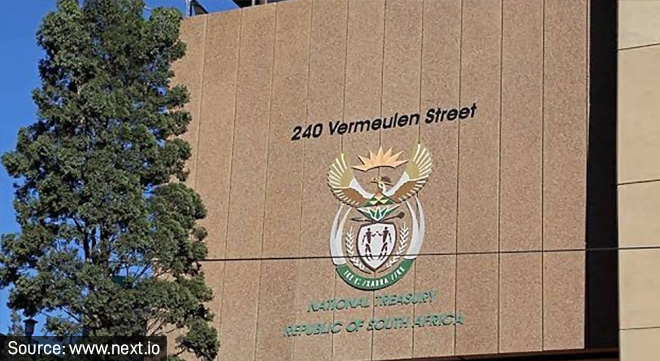
National Treasury regards its intervention in 69 municipalities as a success, but says the measures were only a short-term response to much deeper financial and governance problems in local government.
The intervention began in June, when the Minister of Finance suspended the July 2026 equitable-share transfers to 69 municipalities as a corrective measure to address the mismanagement of public funds.
Read: Treasury intervention lays bare concentrated municipal debt
Treasury’s decision quickly became the subject of parliamentary scrutiny, including questions about the legal basis for withholding the equitable share and concern that residents could ultimately bear the consequences of municipal financial failures.
Read: Treasury faces seven-day deadline over withheld municipal funds
Read: Treasury swaps sanctions for stricter municipal oversight
By the end of July, 20 of the 69 municipalities had received their full July equitable-share allocations. A further 21 had received partial allocations, while 28 had received none because they had not complied with the requirements.
Yet on 31 July, National Treasury released the remaining R7.1 billion to all 49 municipalities. The release was not based on a finding that they had met the original compliance requirements. Treasury said it had withheld the July equitable-share funds for close to 30 days and decided that continuing to do so risked having an adverse effect on basic service delivery, particularly for poor households.
The money was released conditionally, with a structured compliance programme and further deadlines for the municipalities to address the financial and governance failures identified by Treasury.
At the RMB Morgan Stanley Big Five Investor Conference earlier this week, National Treasury director-general Dr Duncan Pieterse said: “In our view, this initiative was a success,” he said.
He pointed to payment agreements signed by many of the affected municipalities with their creditors, as well as procedures introduced to manage irregular expenditure and prevent it from recurring.
“They must still correct the serious financial and governance weaknesses the process identified,” Pieterse said.
Treasury has put a structured compliance programme and deadlines in place to monitor whether municipalities are making progress.
Pieterse said National Treasury could withhold equitable-share transfers again if municipalities failed to address the weaknesses identified.
Treasury is also pursuing money owed to municipalities
The intervention also exposed a problem on the other side of the municipal balance sheet: municipalities are not only struggling to collect money from households and businesses; they are also waiting for payment from the government itself.
When the 69 municipalities affected by Treasury’s intervention appeared before Parliament in July, the Financial and Fiscal Commission (FFC) said they were collectively owed R217.9bn by households, businesses and organs of state. Government departments and other organs of state accounted for R11.6bn of that amount.
Read: Municipalities are owed R218bn. So why are they running out of money?
The FFC pointed out that national and provincial departments were themselves failing to pay municipalities for services rendered, even as municipalities were being pressed to meet their own financial obligations.
“We are also taking action to ensure that government itself pays what it owes to municipalities.”
He said National Treasury was writing this week to national departments with outstanding balances owed to municipalities to verify the amounts and make arrangements to settle them.
“Where non-payment of municipal accounts persists,” Pieterse said, “the National Treasury will engage those accounting officers to ensure that their debt to municipalities is settled.”
Pieterse acknowledged, however, that enforcing payment was only part of the answer.
“We are painfully aware that these steps can only be a short-term remedy,” he said. “More fundamental reforms to local government are urgently needed to support a sustainable turnaround.”
The focus shifts to municipal revenue and basic services
Treasury’s broader reform programme includes measures aimed at how municipalities deliver basic services and collect revenue from them.
Two of the main initiatives are the Metro Trading Services Reform (MTSR) and the Smart Meters Grant Programme.
The MTSR focuses specifically on metropolitan municipalities and their trading services – water, sanitation, electricity, and waste management. It is designed to improve their institutional, financial, and operational performance, while increasing their ability to attract commercial finance for infrastructure investment.
The programme includes a R54bn performance-linked incentive over six years. Access to the incentive is tied to performance improvement plans and independently assessed targets, rather than being an unconditional allocation.
Treasury says the reform is intended to improve the reliability and quality of municipal services while increasing investment in infrastructure.
The Smart Meters Grant Programme addresses municipal electricity and water services through smart metering systems, including bi-directional meters and bulk meters. The programme is intended to improve revenue management, cash generation, and operational controls, while reducing technical distribution losses.
A new approach to municipal infrastructure
Treasury is also changing how municipal infrastructure is funded, prepared, and delivered.
The municipal grant framework is being reworked to place greater emphasis on performance, implementation capacity, and the quality of infrastructure projects. The new Urban Development Financing Grant, for example, incorporates several existing programmes and includes components for metropolitan trading services, project and programme preparation, and the Budget Facility for Infrastructure.
Treasury is also updating the regulatory framework for municipal public-private partnerships. The proposed amendments to the Municipal PPP Regulations are intended to address procedural requirements and clarify the framework for municipal PPPs.
The changes form part of a broader effort to improve infrastructure project preparation and bring more private-sector finance into public infrastructure.
The Budget Facility for Infrastructure (BFI) is being used to assess and develop strategic infrastructure projects, while the newly established Infrastructure Finance and Implementation Support Agency (IFISA) brings together several infrastructure-finance and project-preparation functions. These include the PPP and Capital Projects Appraisal units, the Neighbourhood Development Partnership Programme, and the Infrastructure Fund.
IFISA’s mandate includes mobilising private finance and expertise, improving risk allocation and providing procurement and project-management support. Treasury says the consolidation is intended to address fragmentation in infrastructure planning and strengthen the pipeline of projects that are ready for financing and implementation.
The longer-term reforms
Pieterse said the third part of the reform package is an overhaul of the legislation and regulations governing local government.
“We will publish amendments to the Municipal Finance Management Act later this year to address recurring weaknesses in municipal financial management,” he said.
The amendments aim to identify financial stress earlier, support firmer action where failure persists, and assign clearer responsibility for corrective measures in municipalities.
The fourth part of the package focuses on longer-term structural changes to South Africa’s system of local government.
The Department of Co-operative Governance and Traditional Affairs is leading the development of a new White Paper on local government, while National Treasury is reviewing the local government fiscal framework.
Pieterse linked these measures to the broader structural reform programme under Operation Vulindlela.
“These structural reforms to the local government landscape will take time to implement, and they will require political will,” he said.
“But, like restructuring of the electricity industry and fixing South Africa’s logistics industry, the reforms are non-negotiable if we want to increase investment, job creation, and economic growth in South Africa.”

