
People experiencing high emotional stress are four times more likely to make poor financial decisions, while Discovery data suggests mental well-being may also influence whether people dip into their two-pot retirement savings.
People in financial distress are 2.5 times more likely to report symptoms of depression, anxiety, and sleep problems, while members identified as being at high risk in terms of mental well-being had two-pot withdrawal rates 1.7 times those of members at low risk.
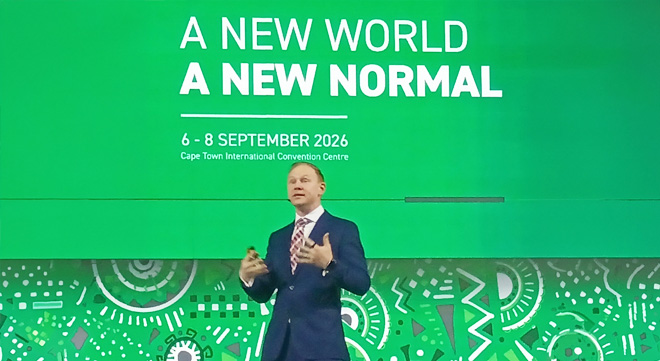
The findings were presented by Guy Chennells (pictured), chief commercial officer: Corporate and Employee Benefits at Discovery, at the Institute of Retirement Funds Africa (IRFA) Conference in Cape Town on 7 September 2026.
Chennells said the relationship between mental and financial well-being works in both directions.
“Your state of mental well-being is impacting your financial decisions, which impacts your financial state of affairs,” he said.
People experiencing financial distress are, in turn, more likely to report depression, anxiety, and sleep problems, creating what Chennells described as a “vicious cycle”.
He said understanding this relationship was important because otherwise the industry risked missing some of the underlying factors behind the behaviour reflected in two-pot withdrawal statistics.
Discovery was able to overlay retirement-fund data with information from across its broader ecosystem, including Vitality Money, to examine how financial management and well-being interact with retirement-savings behaviour.
It is not just about income
The withdrawal data points to a more complicated relationship between income and financial behaviour.
People aged 30 to 40 are withdrawing at 1.8 times the rate of those aged 50 and older. Lower-income members withdraw at three times the rate of higher-income members, while people earning more than R1 million a year withdraw at roughly half the rate of the high-income group.
That creates a sixfold difference between the lowest- and very-high-income groups.
But income alone does not explain why people are withdrawing.
When Discovery overlaid its Vitality Money data, the relationship reversed among people who managed their money poorly. Very high-income members with poor money-management behaviour were withdrawing at 3.5 times the rate of very low-income members who managed their money well.
Chennells said the finding highlighted the importance of looking beyond income when trying to understand withdrawal behaviour.
The word-of-mouth effect
The timing of withdrawals throws up another interesting behaviour.
After the two-pot launch in September 2024, first-time withdrawals settled into a fairly constant level. In other words, people were dipping into their savings when something happened in their lives and they needed the money.
The repeat withdrawers, however, were “waiting at the gates” for the new tax year to arrive, ready to access their savings again.
“We’ve got to work out how to help these habitual withdrawals, because that’s actually where most of the withdrawing behaviour is coming from,” Chennells said.
But something else in the data caught his attention.
In March 2026, first-time withdrawals jumped to more than twice the level at which they had generally been running. Chennells calls this the “word of mouth effect”.
His explanation starts with the conversations happening in the workplace and among friends as the new tax year approached. Someone who had already withdrawn could tell a colleague about it, and for someone who had never accessed their two-pot savings, those conversations could leave them with two messages.
The first was that there was a way to get money out of their retirement savings.
The second was that they could get that money out in March.
The first message was true. The second was not necessarily true for the person hearing it, Chennells pointed out. It might have been true for the colleague who had made the withdrawal, but that did not mean everyone had to wait until March to access their savings.
Chennells used February as an example. If you had never accessed your savings, there was arguably a good reason to do so in February: your savings would have more time to build up, and you would still have access to another withdrawal in the following tax year if you needed it.
Instead, first-time withdrawals surged in March.
For Chennells, that suggested the conversations around two-pot were influencing behaviour. One person talks about accessing their savings, someone else hears about it, and the idea starts to spread.
He described it as an almost peer-pressure effect: people hear that someone else has accessed their money and start thinking about what they could do with their own savings.
Mondays are busy; weekends are not
The withdrawal data also shows a clear difference by day of the week.
Monday recorded 19 359 withdrawals, compared with 14 130 on Tuesday, 13 796 on Wednesday, 13 826 on Thursday, and 10 966 on Friday.
The numbers fell sharply over the weekend, to 4 733 on Saturday and 3 519 on Sunday.
Monday withdrawals were 1.7 times the baseline, while weekend withdrawals were 0.4 times the baseline.
The data also shows a difference in how much members take. First-time withdrawers sometimes take considerably less than the amount available, suggesting a specific financial need. Repeat withdrawers are more likely to exhaust their savings.
Across the data, the average withdrawal is about 95% of the available savings pot, with more than 80% of repeat withdrawers taking more than 80% of their available balance.
Where is the money going?
The main reason for accessing two-pot savings is the cost of living.
The latest data presented by Chennells shows car and house expenses accounting for about 25% of withdrawals, with education at 22%. Short-term debt is also a significant reason for accessing the money, particularly among higher-income members.
Only about 1% of withdrawals are for emergencies, while emergency withdrawals occur at about three times the rate of withdrawals for travel.
The pattern around education is particularly pronounced among lower-income members, while higher-income members are more likely to use the money to deal with short-term debt.
Chennells described the latter finding as a “shocker”, given the resources available to higher-income households.
There is also a substantial day-to-day pressure behind the withdrawals. Rather than being used mainly for discretionary spending, the money is often being used to cover costs people cannot meet from their ordinary income.
That fits with earlier Discovery data, which found that education, car and home expenses, short-term debt, and day-to-day expenses accounted for the bulk of withdrawal reasons.
Gambling is adding another pressure. Chennells said the total value of bets wagered had increased by 226% between 2019 and 2025 and warned that gambling was becoming a serious threat to retirement savings.
“This is a real problem that is coming for our members’ retirement futures, and we need to be aware of it right now,” he said.
Two-pot improves the outcome, but the 6% problem remains
Chennells emphasised that two-pot has improved expected retirement outcomes but said this should not be confused with solving South Africa’s broader retirement-preparedness problem.
His modelling used a hypothetical member, Dave, aged 30, with R240 000 in current retirement assets, a salary of R300 000 and a contribution rate of 7%.
Under the pre-two-pot model, where Dave cashes out when changing jobs, his projected replacement ratio at retirement is just 16%.
If he withdraws annually under two pot, the projected replacement ratio rises to 39%. If the underlying financial problems are addressed and he stops withdrawing, it rises to 51%.
A replacement ratio of 75% would require a contribution rate of 12.5%, rather than 7%.
Chennells said this illustrated why simply encouraging people to save more would not be enough.
“It is impossible until you solve the root cause issue. Until someone has got out of financial disaster, you are not going to be able to get them to make better financial decisions.”
The problem is particularly difficult because changing contribution rates requires sustained behavioural change.
“Now that, my friends, is a serious behavioural problem. It’s seriously hard to get someone to change their retirement contribution rate,” he said.
What should retirement funds do?
Chennells identified three areas that need attention if the industry is to move beyond the long-standing 6% comfortable-retirement figure: addressing the root causes of financial distress and debt, changing financial behaviour through tools and guidance, and responding to the emerging gambling problem.
Discovery has introduced Debt Reset, which is designed to help eligible members deal with qualifying short-term unsecured debt by temporarily redirecting retirement contributions.
Read: Debt and retirement pressures drive new product thinking
Its Contribution Optimiser helps members assess their projected retirement income against their target and choose a tailored plan to increase contributions. The company is also developing a solution aimed at the impact of gambling on savings, which Chennells said is due to be rolled out in October.
For Chennells, the broader challenge is not simply to tell members to preserve their retirement savings, but to address the financial pressures that make withdrawals attractive in the first place.
“Our people are in crisis. They need real help, and we can provide it.”
He challenged other retirement funds to consider what practical interventions they could introduce for their own members.
“There are problems to solve, and we need to and can do something to address them.”

