
South Africa’s economic reform agenda is increasingly colliding with a hard reality: national fiscal stability means little if municipalities continue to fail.
After years focused on rebuilding fiscal credibility and stabilising debt, National Treasury is now shifting more aggressively towards structural reform – particularly in electricity, logistics, infrastructure, and local government.
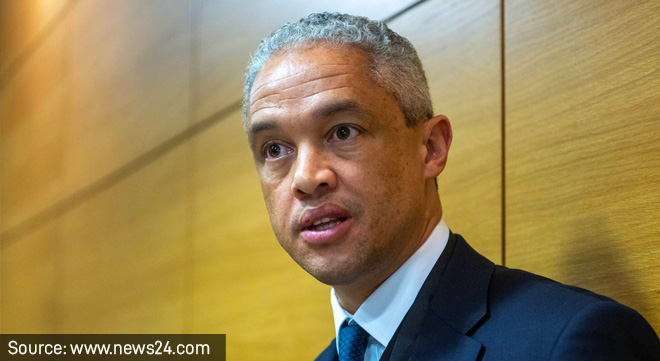
But Treasury Director-General Duncan Pieterse (pictured) warned that municipal dysfunction remains one of the biggest risks to that strategy.
At the PSG Financial Services Annual Conference in Sun City last week, Pieterse said weak municipalities are undermining growth, destabilising service delivery, and placing increasing strain on entities such as Eskom.
Recent findings presented by the Special Investigating Unit (SIU) to Parliament’s Standing Committee on Public Accounts disclosed widespread patterns of procurement irregularities, fraud, contractor non-performance and governance failures across municipalities in the Free State, North West, Gauteng, and KwaZulu-Natal.
The SIU said investigations since 2012 have led to more than R545 million in contracts and administrative decisions being set aside, with over R1.14 billion referred for civil litigation through the Special Tribunal. Yet actual recoveries so far amount to just R1.14m.
The financial strain is equally severe. Finance Minister Enoch Godongwana said in his February Budget Speech that 63% of South Africa’s municipalities are in financial distress, while National Treasury estimates that well over 150 municipalities are struggling to maintain basic operations.
Read: SIU findings expose widening municipal governance failures
The growing financial and governance pressure has pushed municipal reform closer to the centre of Treasury’s economic strategy.
Pieterse said “major political reform is really required”, adding that upcoming local government elections would be “very, very critical”.
His remarks offered one of the clearest indications yet of how Treasury sees the next phase of South Africa’s reform agenda: tighter fiscal management at national level, combined with more aggressive intervention in failing municipal systems.
Fiscal credibility bought time – not growth
Pieterse said Treasury’s immediate priority over the past few years had been restoring fiscal credibility after more than a decade of rising debt and persistent deficits.
South Africa last achieved a primary budget surplus – where revenue exceeds non-interest expenditure – in 2008/09. From 2010 onwards, expenditure consistently exceeded revenue, forcing the government to borrow more each year and driving debt sharply higher.
Treasury’s response focused on containing expenditure, rebuilding primary surpluses, and stabilising debt.
According to Pieterse, the government has now achieved progressively larger primary surpluses for three consecutive years, while debt-to-GDP appears to have peaked in the 2025/26 financial year.
Read: Is South Africa finally turning the corner on debt?
The goal, he said, was not simply to satisfy markets.
“The reason we focused on fiscal credibility was not that it makes Treasury officials happy, but because it allows you to run a more sustainable economy by, amongst other things, bringing down the cost of capital and the cost of borrowing.”
Pieterse argued that improving fiscal credibility had already helped South Africa to weather recent global volatility better than many emerging-market peers following the oil shock and wider Middle East instability.
But he warned that fiscal consolidation alone cannot sustain the economy indefinitely if growth remains weak.
“Fiscal sustainability is impossible in an environment where growth is at 1%,” he said.
That has pushed structural reform higher up Treasury’s agenda.
Operation Vulindlela shifts focus to growth
Treasury and the Presidency increasingly turned to Operation Vulindlela to address structural constraints holding back growth, particularly in electricity and logistics.
Pieterse said electricity reform has already fundamentally changed the investment landscape.
One of Operation Vulindlela’s earliest interventions was removing the licensing cap on private electricity generation projects.
At the time, private projects were limited to one megawatt. Today, there is effectively no cap.
The scale of the response has been dramatic.
Pieterse said the private-sector generation pipeline reached about 4 000 megawatts in the first year after the cap was lifted. It now stands at roughly 36 000 megawatts.
For comparison, Eskom’s available generation capacity on a typical day is about 28 000 megawatts.
“That’s going to fundamentally change, in our view, the nature of the electricity sector,” Pieterse said.
Treasury is also working on the next phase of reform: separating Eskom’s transmission assets into an independent entity.
The rationale is to prevent Eskom – still the owner of the transmission grid – from discriminating against private generators through grid access and transmission rollout decisions.
Pieterse described Eskom as “the last vertically integrated electricity monopoly left”.
Treasury is simultaneously developing a credit-guarantee vehicle, backed by international funding partners, to help de-risk private investment into transmission infrastructure.
The aim is to accelerate the rollout of roughly 14 000 kilometres of transmission lines needed to support the expanding generation market.
Transnet reforms follow the same model
A similar restructuring process is now under way at Transnet.
Pieterse said Treasury is separating the ports business from Transnet’s broader freight operations after years of underinvestment in ports infrastructure.
The shift is designed to allow ports operations to make independent investment decisions rather than competing internally for capital allocation.
Private-sector participation is also expanding.
Pieterse pointed to the recent 25-year concession awarded to Philippines-based ICTSI to operate Durban Container Terminal Pier 2 as part of the broader logistics reform strategy.
The government is also linking public infrastructure funding to private-sector co-investment.
According to Pieterse, roughly R10bn allocated to Transnet freight corridors is expected to unlock about R18bn in additional private investment.
Municipal dysfunction emerges as the next major risk
Although reforms in electricity and logistics are advancing, Pieterse warned that municipal collapse increasingly threatens to undermine broader economic gains.
Local government may not have a direct claim on the national fiscus, he said, but dysfunction in municipalities quickly spills into the rest of the economy. This includes deteriorating infrastructure, weak service delivery, mounting unpaid Eskom debt, and declining business confidence in major cities.
Treasury’s intervention strategy is becoming more aggressive.
One of the clearest examples is the Eskom Municipal Debt Relief Programme, announced by Godongwana in the 2023 Budget Speech and implemented from 1 April 2023.
The programme was designed to help financially distressed municipalities eliminate historical bulk electricity debt owed to Eskom.
Under the arrangement, qualifying municipalities can have Eskom debt – including interest and penalties accumulated up to 31 March 2023 – written off in stages over three years, provided they comply with strict conditions.
Those conditions include keeping current Eskom accounts up to date, implementing smart prepaid meters to improve revenue collection, and enforcing stricter credit-control measures on their own customers.
The debt write-off operates in phases. If a municipality complies for 12 consecutive months, one-third of its qualifying historical debt is written off, with the process repeating over three years.
About 75 municipalities signed up to the programme. After the first year, 24 had qualified for their first tranche of debt relief after meeting payment conditions.
Others failed to comply.
Pieterse said 13 municipalities signed up but continued accumulating debt without changing behaviour.
Treasury then issued an ultimatum: either resume payments immediately or sign Distribution Agency Agreements (DAAs) allowing Eskom to take over electricity distribution and revenue collection functions.
“Nine of the 13 municipalities immediately wrote back to us and said, we’ll sign DAAs with Eskom immediately,” Pieterse said.
The shift reflects a broader reality confronting Treasury: many municipalities have struggled to maintain the programme’s conditions, with defaults continuing to push municipal debt higher.
The direction of Treasury’s reforms suggests that where municipalities cannot sustain electricity distribution functions, Eskom will increasingly take over aspects of distribution and revenue collection through DAAs.
Water services reform points to the same shift
Treasury increasingly sees water services moving in the same direction as electricity distribution: municipalities may retain formal oversight, but operational control is likely to shift towards entities better able to deliver and maintain infrastructure.
Pieterse said the distinction between a Water Services Authority and a Water Services Provider is becoming increasingly important as municipal systems deteriorate.
Under existing legislation, municipalities generally act as the Water Services Authority, meaning they remain legally responsible for ensuring water delivery within their jurisdictions.
But the actual provision of services does not have to be performed by the municipality itself.
“The Water Services Provider can be anyone,” Pieterse said, pointing to water boards, utilities, and private-sector operators as possible alternatives where municipalities are unable to maintain infrastructure or manage billing and revenue collection effectively.
That distinction is becoming more significant as water infrastructure failures intensify across parts of the country.
Pieterse indicated that Treasury expects more municipalities to move towards outsourced or utility-based delivery models over time, particularly where trading services have effectively collapsed.
The shift mirrors what is already happening in electricity distribution through Eskom’s DAAs.
In practice, municipalities may continue to hold the formal mandate for water services while operational responsibility increasingly migrates to entities capable of maintaining infrastructure, managing technical operations, and collecting revenue sustainably.
That would mark a significant restructuring of local government service delivery.
Rather than outright privatisation or the removal of municipal authority, Treasury’s emerging approach appears to focus on separating political oversight from operational delivery where municipalities can no longer sustain core utility functions.
Ring-fencing utilities becomes a reform priority
Treasury is also targeting the financial structure of municipal trading services.
Pieterse said many metros are using revenue generated from utilities such as water and electricity to subsidise broader municipal spending while underinvesting in maintenance.
Johannesburg was one example. According to Pieterse, the city collects more than R11bn in water revenue annually but spends only about R1.5bn on maintaining water infrastructure.
Treasury’s Metro Trading Services Reform is intended to ring-fence municipal trading services such as water and electricity, with metros expected to reinvest more of that revenue into maintaining the underlying infrastructure.
Pieterse said municipalities participating in the reform would gain access to Treasury performance grants aimed at recapitalising those utilities.
The broader objective is to restore financial sustainability to municipal trading services and improve their ability to support future infrastructure investment.
Municipal PPPs move back onto the agenda
Treasury is also trying to expand the use of public-private partnerships at municipal level.
PPP regulations were updated last year to allow unsolicited private-sector proposals and faster approval processes for smaller projects.
Pieterse said Treasury plans to finalise a dedicated municipal PPP framework by the end of June.
The broader goal is to improve the quality and bankability of infrastructure projects – making them credible and financially viable enough to attract private-sector funding rather than relying solely on state resources.
Pieterse argued that South Africa does not face a shortage of capital but a shortage of investable projects with reliable governance, revenue structures, and execution capacity.
“Our view is that there’s not a lack of capital in the ecosystem,” Pieterse said. “The biggest challenge we have is the challenge of the quality and the bankability of our project pipeline.”
The next phase of reform
Pieterse’s remarks suggest Treasury increasingly sees municipal reform as central to South Africa’s broader economic recovery strategy.
In short, municipalities that can reform will receive support and incentives; those that cannot may increasingly lose operational control of critical services.
That shift is already reshaping electricity distribution, water services, infrastructure funding, and municipal finance.
Whether it succeeds may determine whether South Africa’s national reform agenda translates into visible improvements in daily economic life – or remains largely confined to fiscal and policy frameworks at national level.


