The South African Revenue Service has secured a High Court preservation order against two former officials – who resigned from the organisation in 2024 and 2025, respectively – in a move it says underscores its intensified crackdown on corruption and the illicit economy both inside and outside the institution.
In an ex parte application – meaning the order was sought without notifying or hearing the other parties in advance – brought in the High Court in Pretoria under section 163 of the Tax Administration Act, SARS obtained an order placing a range of assets linked to the former officials under curatorship.
The ex parte nature of the application is significant: it allows SARS to act swiftly and without alerting the individuals involved, reducing the risk that assets could be moved, hidden, or dissipated before the court intervenes. It also helps explain why the officials have not been named at this stage, because they were not given an opportunity to respond before the order was granted.
According to a SARS media statement dated 9 April, the revenue authority presented prima facie evidence of alleged non-compliance with tax laws, including corruption, money laundering, unauthorised work outside SARS, breaches of SARS secrecy provisions, and the abuse of state property in furtherance of corruption.
The Court appointed a curator bonis to preserve and manage the assets while SARS finalises tax assessments. The order covers three immovable properties, six vehicles, and multiple bank and investment accounts held across major financial institutions. The curator has been authorised to identify and locate additional assets that may have been concealed or placed beyond SARS’s reach.
The properties, estimated to be worth several million rand, may not be sold or transferred without authorisation. The curator has immediate powers to secure, control, manage, and, where authorised by the Court, dispose of assets to recover taxes that may be due.
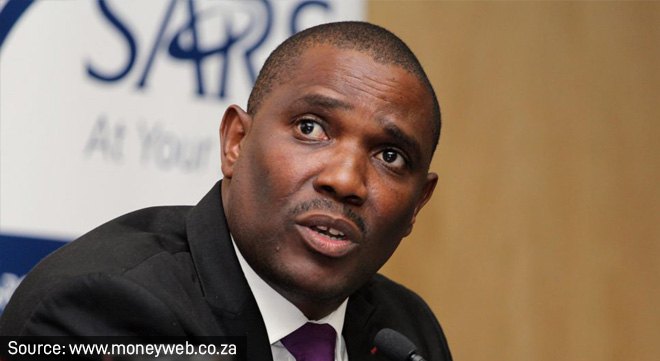
Acting SARS Commissioner Dr Johnstone Makhubu (pictured) said corruption involving SARS employees would be dealt with decisively.
“Corruption by SARS employees, whether former or present, is the worst form of betrayal. It undermines public trust, damages the integrity of our systems, and strikes at the heart of the state’s ability to serve its people.”
He said the preservation order reflects SARS’s strategy of early intervention.
“We are acting early, securing assets, and following the money. Where corruption intersects with tax and customs systems, SARS will intervene swiftly and lawfully. No one is above the law, especially those entrusted to enforce it.”
Makhubu also warned that resignation would not shield wrongdoing.
“The days when employees engage in criminality and opt to resign rather than face the consequences of their wrongdoing are over. Those who think that this method will exculpate them from the consequences of their actions, must know that they’ll be pursued and will be found wherever they are.”
SARS said the action forms part of its Illicit Economy Strategy, which implements the National Illicit Economy Disruption Programme announced by President Cyril Ramaphosa during the 2026 State of the Nation Address. The strategy targets corruption and fraud in government departments as high-priority areas, aims to protect the revenue base, disrupt criminal activity inside and outside SARS, restore institutional integrity, and ensure visible consequences for non-compliance.
The revenue authority credited whistleblowers – both employees and members of the public – with helping it uncover the alleged complex corruption schemes, and indicated that further civil, administrative, and criminal processes may follow as investigations proceed.
Earlier customs corruption case moves into enforcement
The preservation order comes less than a month after SARS moved into the enforcement phase of a separate customs corruption investigation.
Read: SARS raids mark overdue escalation in illicit economy crackdown
On 17 March, SARS announced that it had executed search-and-seizure and preservation orders against six current and former officials, as well as associated taxpayers and traders, linked to a customs corruption probe. The case involves allegations that customs inspection teams colluded with clearing agents and importers to manipulate inspections in exchange for cash bribes.
According to SARS, financial analysis in that matter identified more than R45 million in under-declared taxable income, translating into estimated income tax losses of R18m. The orders were obtained to secure evidence and assets believed to be connected to the alleged scheme.
SARS stated the individuals involved are suspected of breaching their statutory obligations and prejudicing compliant taxpayers, legitimate traders and the fiscus. Commissioner Edward Kieswetter said at the time that the operation formed part of efforts to protect the fiscus, secure borders, and enforce compliance “without fear, favour, or prejudice”, and those who abuse SARS’s mandate from inside or outside the organisation must face the consequences.
The customs case, together with the latest preservation order against former officials, reflects a broader shift from warnings about illicit activity to more visible enforcement steps against both internal and external actors.
Kieswetter’s illicit economy figures and enforcement focus
These actions align with the enforcement priorities outlined by Kieswetter in his 1 April address on revenue performance, in which he focused extensively on South Africa’s illicit economy.
Read: SARS exceeds R2 trillion as compliance, not commodities, drives revenue
Kieswetter reported that SARS had recovered R20 billion in the past year from its focus on the “criminal and illicit economy”.
He said this figure represents actual cash collected and does not capture the full value of tax assessments that remain under dispute as targeted parties challenge SARS in court or through other processes.
Kieswetter also highlighted a portfolio of serious tax and customs crime investigations, many of which arise from matters aired before the Zondo Commission. He stated that about 1 200 investigations had produced more than R80bn in results related to illicit financial flows, and that several schemes had “collapsed” as a result.
According to Kieswetter, SARS is increasingly relying on advanced risk engines and artificial intelligence to detect and prevent fraud and impermissible claims. These tools analyse tax returns and refund claims in real time, flagging high-risk patterns, and blocking suspicious payments before money leaves the fiscus.
He has linked these measures to a broader modernisation drive at South Africa’s borders, including enhanced customs controls and non-intrusive scanning, aimed at reducing smuggling, under-declaration, and other illicit trade practices.