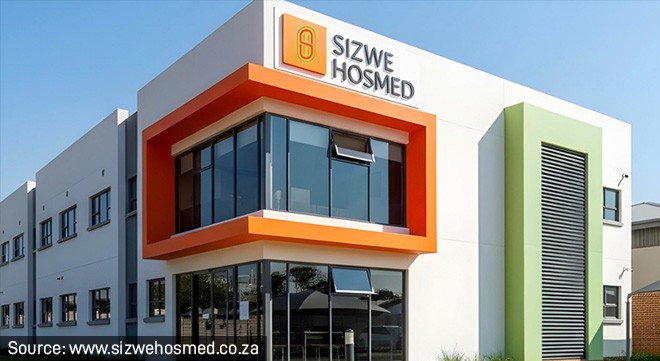
Sizwe Hosmed has restored provider access and improved its claims processes, according to a recent update issued by curator Lebogang Mpakati.
Mpakati, who was appointed in early September in terms of the Medical Schemes Act (MSA) and the Financial Institutions (Protection of Funds) Act, said the focus since her appointment has been on provider engagement, financial stability, governance corrections, and resolving long-standing administrative issues identified in prior reviews.
Read: High Court confirms curatorship of medical scheme
Although the curator said the scheme has made “substantial progress” in stabilising its operations, she acknowledged that challenges remain, according to a report by IOL.
One of the scheme’s operational difficulties before the curatorship was deteriorating provider relationships that resulted in restricted access for members at many private hospital groups.
Mpakati has confirmed that access has been restored at several major groups following engagement and the stabilisation of payment cycles. These groups include Netcare, Life Healthcare, Lenmed, Busamed, Clinix, and National Hospital Network facilities.
Membership levels have continued to decline, influenced by the scheme’s failure to meet the threshold required for accreditation under the South African Local Government Bargaining Council (SALGBC).
Sizwe Hosmed will soon lose members affiliated to the South African Local Government Association (SALGA) following these developments. However, the update emphasised that the scheme would remain operationally viable based on its remaining (non-SALGA) membership base.
Retention and recovery strategies have been prioritised to mitigate further attrition, and the curator said the scheme is working to position itself competitively relative to other open schemes of similar size.
Solvency: sharp decline since 2021 merger
The scheme’s solvency deterioration remains one of the central drivers of regulatory intervention.
The curator’s update reiterated the solvency trajectory reported previously:
- 5% at the time of the 2021 merger between Sizwe Medical Fund and Hosmed Medical Scheme;
- 45% a year after the merger;
- below 7% by mid-2025 (reported by the statutory manager);
- 6% in June 2025; and
- 62% in July 2025.
All figures fall far short of the 25% statutory minimum required under the Medical Schemes Act.
The KPMG forensic review commissioned by the Council for Medical Schemes found that a surge in claims during the first half of 2023 was a principal driver of the deterioration. The statutory manager also identified governance gaps, regulatory non-compliance, administrative weaknesses, and member losses that exacerbated the solvency decline.
Contribution increase and benefit adjustments
In an effort to correct historical under-pricing, the scheme implemented an expedited 19.15% contribution increase effective 1 November 2025.
The curator said no further increase would be imposed in January 2026. A 5% benefit increase will apply from 1 January 2026.
Benchmarking by the scheme’s actuaries found Sizwe Hosmed’s plans and contributions to be competitive relative to other open medical schemes in a similar size category, Mpakati said.
Improvements in claims processing
Mpakati reported that:
- claims payment runs have been stabilised;
- aged and disputed claims are being actively worked through;
- turnaround times for claims processing have improved; and
- direct communication channels between the scheme and providers have been strengthened to reduce delays and uncertainty.
This stabilisation has also supported improved provider relations and member access to services.
Governance corrective measures
Corrective actions are being implemented based on the findings from the KPMG forensic review and prior regulatory reports. These include:
- improved governance and oversight mechanisms;
- enhanced financial controls;
- strengthened internal processes;
- measures to address administrative irregularities; and
- the introduction of improved reporting structures.
Additional priorities include digital modernisation, rebuilding stakeholder confidence, and addressing operational weaknesses identified by the statutory manager.
Mpakati outlined several strategic areas for the coming months:
- Membership recovery and growth: targeted retention efforts and new acquisition strategies focused on attracting younger, lower-risk members.
- Strengthening relationships with providers: continued engagement to ensure reliable access and predictable payment cycles.
- Digital transformation: upgrading systems to improve claims efficiency and member experience.
- Governance enhancement: embedding stronger oversight and compliance frameworks.
- Exploration of amalgamation opportunities: discussions with smaller, solvent open schemes are being considered as one of the options to support long-term sustainability.