The Special Investigating Unit (SIU) has expressed serious concern over a directive issued by the Road Accident Fund (RAF) to its employees during the SIU’s investigation, which instructed staff to channel responses to the SIU through RAF management.
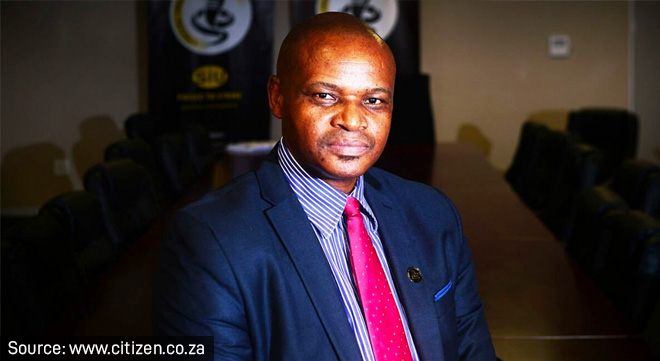
Advocate Andy Mothibi (pictured), head and chief executive of the SIU, told the Standing Committee on Public Accounts (SCOPA) on 10 October that employees were directed to forward the SIU right of reply to the RAF Management so that “responses to the SIU are well coordinated”.
“The response received from a person of interest is instrumental for our conclusive findings. Any coordination that bypasses the SIU’s process undermines the integrity of the investigation,” Mothibi stated during his presentation.
He said the directive was viewed as a potential compromise to the investigation and may amount to interference. Written correspondence has been sent to the former RAF CEO, Collins Letsoalo, in this regard.
Mothibi’s comments formed part of the SIU’s presentation during SCOPA’s formal oversight inquiry into the RAF’s finances and governance, which began last week.
Read: RAF inquiry | ‘You can’t fix liabilities through accounting’
The SIU also reported non-cooperation by RAF officials. Information requested was often provided outside stipulated timelines, some requests remained unanswered, and in certain cases the SIU had to resort to opening a criminal case against a RAF executive for failure to comply with lawful subpoenas. These delays, Mothibi noted, have hindered the timely conclusion of the investigation.
SCOPA last week began its formal oversight inquiry into the RAF’s finances and governance. The inquiry, which runs until November, will examine the RAF’s growing backlog of unpaid claims, suspended staff, procurement irregularities, and long-standing accounting disputes that have left the entity effectively unaudited for years.
This week, the committee will hear evidence pertaining to procurement and financial management. The committee aims to table its final report – and recommendations on accountability and reform – before the National Assembly by the end of the year.
Governance failures at the RAF
The RAF’s governance and financial practices have been under scrutiny for some time. SCOPA launched a full-scale inquiry following repeated reports of procurement irregularities, weak governance structures, and financial mismanagement. The SIU’s investigations, informed by a 5 May 2021 affidavit from the RAF Senior Manager for Forensic Services and correspondence with the Legal Practice Council, provided critical evidence highlighting systemic deficiencies.
The SIU’s investigation disclosed pervasive governance failures that created an environment “conducive to maladministration, weak internal controls, and escalating financial risk”. According to the SIU, these deficiencies have directly compromised the Fund’s ability to deliver on its mandate to compensate road accident victims.
Governance issues raised included the decision to forego the RAF Panel of Attorneys, the Corporate Panel of Attorneys, and the Johannesburg Regional Office lease.
According to the SIU’s findings, the original, board-approved panel of attorneys was taken without a formal plan to manage the work previously assigned to the panel. Although the board approved a strategy to reduce administrative and legal costs, no alternative arrangement was adequately implemented. The SIU found that the former CEO acted irrationally by presenting a report seeking to forego the panel without any supporting plan, and the board’s subsequent approval reflected weak oversight. The absence of a replacement plan contributed to increased default judgments and legal costs.
Separately, the SIU investigated the Corporate Panel of Attorneys, which handled specific corporate and claims-related work under National Treasury Regulations 16A6.6.
Between May and June 2020, RAF into an agreement with 13 law firms (service providers) for 10 months.
The contract was extended four times and only approved once for six months by the RAF’s board. The other extensions were not approved by the board.
Financial analysis disclosed potential conflicts of interest, uneven allocation of work (one firm received almost 90% of tasks), and payments exceeding delegated authority (R26.6 million). Some law firms conducted work outside their mandated scope, and several contract extensions were approved retroactively by the board.
“The approval to invoke National Treasury Regulations 16A6.6, as well as the subsequent contract extensions and related payments, were undertaken by the office of the then CEO. These actions exceeded his delegated authority and were ratified by the board after the fact,” said Mothibi.
The SIU has issued rights of reply to persons of interest, including executives and former board members, and is finalising evidence packs for disciplinary and criminal referrals.
A June 2025 Moonstone report detailed how Letsoalo had allegedly overruled the Bid Evaluation Committee on a multimillion-rand lease for the RAF’s Johannesburg regional office. The SIU’s interim findings indicated that the former CEO instructed RAF executive Prudence Manyasha to re-evaluate the process, citing unspecified irregularities. The lease was ultimately awarded to Mowana Properties, which manages properties for the Public Investment Corporation (PIC).
Read: Wake-up call for RAF as SCOPA prepares for full-scale inquiry
The SIU’s investigation into the Johannesburg regional office lease found that the former CEO interfered in the procurement process for the Johannesburg office lease, instructing the re-evaluation of a bid already assessed by the Bid Evaluation Committee. National Treasury regulations do not allow a CEO to cancel tenders; the proper process involves referral or deferral to the Bid Adjudication Committee. The cancellation of Tender RAFOOO10/2019 and subsequent awarding of the lease violated both the PPPFA regulation 13(2) and internal RAF SCM policy.
The SIU highlighted weak board oversight, dysfunctional governance committees, and inadequate reporting structures. Decisions with significant financial implications were approved without robust interrogation of risks or compliance requirements. Collectively, these failures created conditions that compromised operational effectiveness and accountability.
Following the SIU investigation, rights of reply were issued to the executives involved, with evidence packs being prepared for submission to relevant RAF authorities.
The SIU is finalising the evidence packs for the disciplinary referrals, which will be submitted to the relevant RAF authorities.
“The matter between the SIU and the former RAF CEO, concerning the opportunity for him to respond to issues arising during his tenure, is sub judice. Accordingly, no adverse findings have been made against the former CEO, pending the finalisation of that process,” said Mothibi.
He added that, similarly, the former board will be allowed to provide its rationale for the decision made, endorsements and approving the ratification, as well as for its failure to implement consequence management.
Compliance with the PFMA
The SIU also identified multiple contraventions of the Public Finance Management Act (PFMA), including irregular, fruitless, and wasteful expenditure. Forgoing the panel of attorneys contributed to an increase in default judgments, totalling about R4.78 billion from 2018 to mid-2023.
Payments exceeding delegated authority and unapproved contract extensions amounted to an estimated R141.8m in irregular expenditure. The flawed procurement process for the Johannesburg office lease contributed to an additional R66.1m in irregular spending.
Other irregularities included the Siyenza claims backlog tender (R317m actual spend out of R713m allocated), the sale and lease-back fleet tender, and cleaning and security contracts, all of which violated PFMA provisions and section 217 of the Constitution.
The RAF’s record-keeping and cash-flow management also raised concerns. Duplicate payments to at least 102 law firms, including Sheriffs, totalled about R340m. Interest on blocked payments and mismanagement of funds in alternative bank accounts further undermined liquidity and financial transparency.
The SIU has engaged with the new RAF board to implement systemic recommendations, including strengthening internal controls and ensuring effective consequence management. Criminal and disciplinary referrals are ongoing, with some legal practitioners cooperating through acknowledgements of debt.
Observations
Although certain areas fell outside the SIU’s formal mandate, Mothibi shared observations relevant to SCOPA’s inquiry. Recruitment, vetting, and appointment processes for senior officials were reportedly flawed. Some executives were appointed without proper vetting, including an individual alleged to have absconded while facing multiple counts of financial misconduct at the City of Johannesburg.
Cash-flow management was a recurring concern. Default judgments have continued to accumulate despite efforts to curb legal costs, with trial dates scheduled years in advance. The SIU noted that the RAF’s practice of shifting bank accounts to avoid attachments, combined with poor reconciliation, created opportunities for manipulation and misstatement of liquidity.
Mothibi noted that the lack of oversight and irregular internal practices may constitute financial misrepresentation, undermine audit compliance, and erode public trust in the Fund’s financial management.
Where issues fall outside the SIU’s scope, SCOPA can refer matters for further investigation under the SIU proclamation.