Retirement funds across Africa must use their vast resources to drive meaningful change by investing for impact, strengthening operational resilience, and actively shaping reforms.
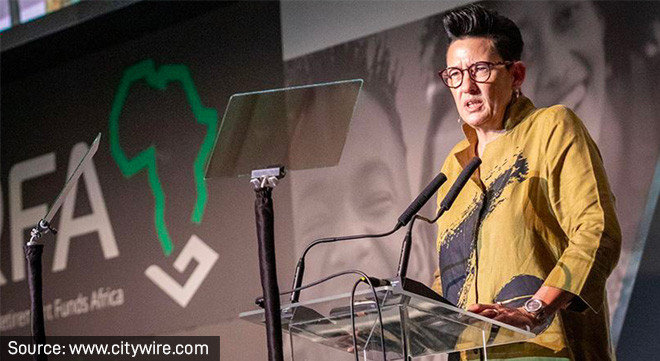
This was the message from Geraldine Fowler (pictured), president of the Institute of Retirement Funds Africa (IRFA), in her opening address at the organisation’s annual conference in Cape Town this week.
This year’s conference, themed “Building Resilience – Leading Change for a Lasting and Positive Impact”, is the largest gathering of retirement fund stakeholders on the African continent.
In her opening address, Fowler said retirement funds were no longer “just custodians of savings” but had become catalysts of stability, trust, and transformation. With trillions of rand in assets under management, she described the industry as holding extraordinary power and responsibility.
“We do not just protect the retirements of our members. Through the scale of the assets we hold, we can shape the very societies in which those members and their families live,” she said.
On the first commitment – investing for impact – Fowler urged funds to be bold in embedding environmental, social, and governance (ESG) principles and driving sustainability. She noted that globally, retirement funds are increasingly recognised as forces for social good, embedding climate resilience in investment strategies, excluding companies tied to corruption or human rights violations, and aligning portfolios to sustainable taxonomies.
In Africa, funds are breaking ground in affordable housing and infrastructure, from power generation to healthcare facilities. In South Africa, she pointed to investments in wind and solar projects that now supply power to hundreds of thousands of homes.
“Our challenge is to accelerate this shift – to move from conversation to implementation,” Fowler said.
Turning to operational resilience, she argued that stability and transparency form “the backbone of trust in the retirement sector”. In a region marked by volatility, operational resilience was not optional but imperative. Strong governance, digital adoption, and robust risk management, she said, were essential to ensure continuity.
“Resilience is not just about surviving crises; it is about withstanding shocks while continuing to deliver with excellence,” Fowler said.
The third commitment, shaping reforms, called for proactive engagement with policymakers. Around the world, reforms are reshaping retirement systems – from the United Kingdom’s auto-enrolment model to South Africa’s two-pot system. Fowler insisted that industry stakeholders could not leave reforms to governments alone.
“This is our call – to shape reforms with vision, and to act with urgency.”
Fowler closed her address with an African proverb: “Tomorrow belongs to the people who prepare for it today.”
The challenge for the industry, she said, was not only to prepare for tomorrow, but for the decades to come.