The Road Accident Fund (RAF) has abandoned its costly legal battle with the Auditor-General over disputed accounting standards, even as a separate forensic investigation into its R1-billion media contracts edges closer to possible criminal charges – marking a shift in how the embattled public entity is confronting years of governance failure.
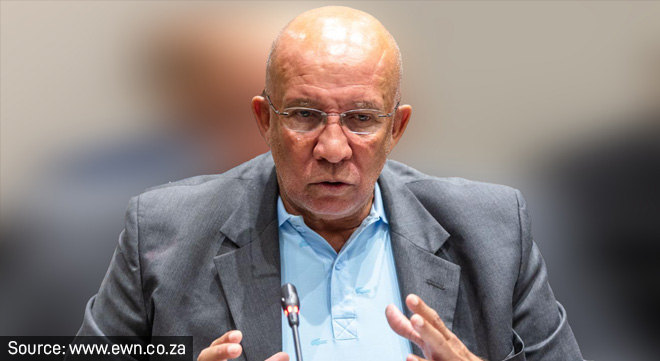
Appearing before Parliament’s Standing Committee on Public Accounts (SCOPA) on Tuesday (3 February), interim RAF board chairperson Kenneth Brown confirmed that the board has withdrawn litigation against the Auditor-General of South Africa (AGSA) and accepted adverse audit findings, while also signalling that a board-commissioned forensic probe into two controversial media contracts is likely to result in disciplinary action and criminal referrals.
The disclosures came as Members of Parliament continued to scrutinise the RAF’s governance collapse, which prompted Transport Minister Barbara Creecy to dissolve the previous board in July last year, citing failures that had “significantly undermined” the Fund’s ability to meet its mandate. A new interim board was appointed in August, with a six-month stabilisation brief.
Accounting standards battle abandoned
One of the clearest signals of change came when the interim board decided to halt the RAF’s long-running court battle with the Auditor-General over accounting standards – a dispute that had already cost the Fund more than R11.2 million in legal fees.
Brown confirmed that the board has formally withdrawn litigation against AGSA. By the time the interim board was appointed in August last year, the RAF had already received adverse audit opinions for the past three financial years and had yet to submit its 2024/25 financial statements.
He told SCOPA that getting the Fund’s reporting back on track was the first priority. With the annual financial statements and report still unfinalised, the board spent the first two months addressing these issues.
“We met with the Auditor-General and discussed all the matters that were withholding the submission or the finalisation of the annual financial statements. And there we just got an agreement with the Auditor-General to say, audit us. We accept the findings that will come through. We’re not going to question anything. Our job is to understand the magnitude of the problem and how we solve for that at the end of the day.”
The dispute dates to 2021, when the RAF abandoned the Generally Recognised Accounting Practice (GRAP) framework in favour of IPSAS 42, dramatically reducing its reported liabilities from R327bn to R34bn. The AGSA rejected the move, issuing a disclaimer audit opinion based on non-compliance with accounting standards and inadequate records.
The RAF took the matter to court, but the High Court dismissed its application, ruling the accounting change had not been approved by the Accounting Standards Board (ASB). The Supreme Court of Appeal upheld the decision in September 2024 and again in March last year, rejecting the RAF’s bid to appeal.
Despite these setbacks, the previous board resolved on 24 April last year to petition the Constitutional Court for leave to appeal – a move now abandoned by the interim board.
National Treasury officials and accounting experts previously told SCOPA that the IPSAS shift amounted to an attempt to “fix liabilities through accounting” rather than address underlying operational failures. Treasury warned the change understated liabilities by recognising them too late in the claims process and bypassed the legally required process for deviating from prescribed standards.
Read: RAF inquiry | ‘You can’t fix liabilities through accounting’
Brown said the board’s priority is restoring credibility and transparency in the RAF’s financial reporting.
A new GRAP standard on social benefits is expected to be finalised in 2026.
Procurement failures and looming criminal charges
Alongside the accounting reset, Brown confirmed that a forensic investigation into two controversial media contracts – each worth R500m – is nearing completion and could result in criminal charges.
The contracts, awarded to MediaMix360 and Dzinge Productions, have long alarmed MPs. SCOPA chairperson Songezo Zibi previously warned that the scale and structure of the deals “made no sense in the real world”, raising concerns that the RAF may have “been taken for a ride”. Nearly R650m was spent within just two years, despite the contracts running until 2027 and 2028.
MPs have repeatedly flagged the rejection of the Government Communication and Information System, despite evidence that it would have been cheaper, the illogical 50/50 split between creative and media-buying services, and a 3% “management fee” added to every invoice. Further red flags included inflated unit pricing on branded items and the absence of proper media monitoring systems, leaving the RAF unable to confirm whether advertisements even ran.
Brown told SCOPA the media contracts were symptomatic of a deeper collapse in procurement discipline. He said the RAF had effectively outsourced core procurement functions to third parties, stripping the organisation of visibility and control over how public money was spent.
“What happens behind the scenes? You don’t know at the end of the day,” he said.
He also disclosed that the interim board uncovered a pattern of last-minute contracting, with agreements rushed through at the tail end of previous administrations, often without proper planning, oversight or alignment to operational needs. These contracts, Brown said, were typically concluded just before leadership changes, limiting accountability, and making it difficult for incoming boards to interrogate decisions already locked in.
“That is not how procurement ought to be working,” Brown said, adding that the full extent of the problem only became clear after the interim board demanded a comprehensive contract register shortly after taking office.
The board is now moving to reassert control over procurement, rebuild internal capacity and tighten oversight in line with the Public Finance Management Act (PFMA), while unwinding systemic failures in planning, contract management and accountability.
The moratorium that forced a reckoning
Brown told SCOPA that the RAF’s funding crisis came to a head after it lost its court battle over payment delays. In September 2025, the High Court struck down the RAF’s urgent bid to extend its 180-day payment moratorium. Judge Jabulani Nyathi ruled the RAF cannot use financial distress as a “guise of urgency” to delay paying billions owed to claimants.
The ruling, Brown said, effectively crystallised about R20bn in unpaid claims at a time when the RAF had only R4bn to R5bn in available cash.
“What broke the camel’s back was when the Road Accident Fund lost the case on the moratorium,” Brown said. “Which meant we need to pay at the end of the day.”
Rather than resist the outcome, Brown said the interim board treated it as a turning point, engaging plaintiff attorneys, medical service providers, and suppliers to stabilise payments and prevent systemic collapse. The RAF accelerated disbursements, paying R4.6bn in the first few months and moving towards a run rate of about R5bn a month.
“We are not an investment company,” Brown said. “Our job is to pay claimants.”
But stabilising payments has also thrown the RAF’s fragile funding model into sharp relief. The Fund is financed almost entirely through the fuel levy.
Brown warned that any push to increase that funding would face immediate scrutiny from National Treasury, which would first point to inefficiencies – including the R1bn media contracts and other flawed procurement.
Using rough calculations, he told MPs that South Africa’s 60 million people and 13.5 million vehicles contribute about R70 per person per month, or roughly R400 per vehicle, to cover medical care, funeral costs, loss of income and general damages. Even doubling the fuel levy – currently R5.50 per litre of petrol and R5.04 per litre of diesel, unchanged since 2018 – would barely close the gap and could fuel inflation.
Efficiency, Brown stressed, must come first. The RAF’s chief investment officer is reviewing the Fund’s investments and funding model to develop a sustainable proposal for Treasury and Parliament, aimed at reducing legal leakage and improving claims administration.
Stabilisation, not yet a turnaround
Brown said the interim board was appointed with a clear mandate: stabilise the Fund, restore public trust, confront legal and financial risks, reduce the claims backlog, and reassess a misaligned funding model.
He emphasised that the RAF is still in a stabilisation phase, not a full turnaround, with a formal programme under way targeting governance reform, operational fixes, stakeholder engagement, and rebuilding credibility.
“The scale of reform required is massive,” he said. “We need to bring everybody on board in the reforms that we will be doing,” including Parliament, as the RAF grapples with one of the most complex public-sector recovery efforts currently under way.