
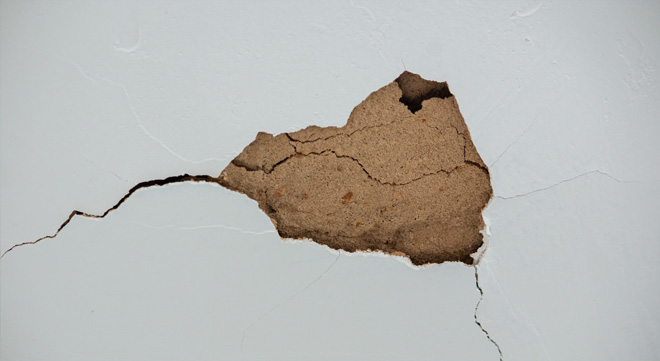
A homeowner who discovers serious cracks in a newly built house does not necessarily have to sue immediately to stop prescription running.
In a judgment handed down on 24 July 2026, the Supreme Court of Appeal (SCA) clarified that prescription in a claim for breach of a home-builder’s warranty to repair major structural defects does not start simply when the homeowner first becomes aware of the defects. The builder must first have failed or refused to repair them after being given a reasonable opportunity to do so.
The ruling draws an important distinction between knowing that defects exist, which may trigger the right to demand repairs, and having the facts necessary to establish that the warranty has been breached and pursue a claim for damages.
The judgment is directly relevant to homeowners and home builders and is also noteworthy for those dealing with statutory warranties and prescription.
The case arose from a building contract concluded in September 2015 between Ruan Janse van Vuuren and WJB Stieger Konstruksie (Pty) Ltd for the construction of a house in Schoongezigt Estate in Rustenburg.
The agreement required the house to be built in a workmanlike manner, to be fit for habitation, and to comply with the applicable technical requirements of the National Home Builders Registration Council (NHBRC).
It also incorporated a warranty requiring the builder, at its own cost and on demand, to rectify major structural defects caused by non-compliance with the NHBRC technical requirements, provided the defects occurred and were notified within the applicable warranty period of not less than five years from the occupation date.
Construction was completed in September 2016, and Janse van Vuuren took occupation at the end of October.
By December 2016, he had noticed cracks in the walls and that the floor in the bar area was sinking. He reported the problems to Stieger Konstruksie, which carried out remedial work in January 2017.
The problems persisted. In November 2017, Janse van Vuuren reported the appearance of a major crack in the house.
A civil and structural engineer appointed by Stieger Konstruksie inspected the property on 6 December 2017. His report, completed on 30 January 2018, identified major structural defects, including severe cracking in various parts of the house. Major repairs were required, and the engineer found the house was uninhabitable.
In June 2018, Janse van Vuuren’s attorney demanded that the builder carry out the repairs identified in the engineer’s report.
In October 2018, Stieger Konstruksie attempted to carry out the recommended repairs, but was unable to carry out effective remedial work because of the nature of the structural defects.
When did prescription start?
Janse van Vuuren instituted his damages claim in January 2021, seeking about R4.64 million, representing the alleged reasonable cost of repairing the structural defects. He also claimed R20 000 a month for alternative accommodation pending completion of the repairs.
Stieger Konstruksie raised a special plea of prescription, contending that the claim had been brought too late.
The High Court in Mahikeng dismissed the special plea, but a full court overturned that decision.
The full court found that Janse van Vuuren’s claim became due when he first became aware of the existence of major structural defects, which it held was no later than 6 December 2017, when the engineer inspected the house.
On that reasoning, the three-year prescription period had expired before the summons was served.
The SCA disagreed.
Section 12(3) of the Prescription Act provides that a debt is not deemed to be due until the creditor knows the identity of the debtor and the facts from which the debt arises. A creditor is deemed to have that knowledge if it could have been acquired by exercising reasonable care.
The SCA said prescription begins only when the creditor has knowledge of the minimum facts necessary to institute an action and is in a position to enforce the right in law.
The critical issue was therefore the nature of the claim Janse van Vuuren was pursuing.
His damages claim was based on the alleged breach of the builder’s warranty to repair the major structural defects – a warranty arising under the Housing Consumers Protection Measures Act and incorporated into the building agreement – rather than simply on the existence of the defects.
Under section 13(2)(b)(i) of the Act, a home builder warrants that it will, at its own cost and on demand by the housing consumer, rectify major structural defects caused by non-compliance with the NHBRC technical requirements, where the defects occur and are notified within the applicable warranty period.
The SCA said the provision contemplates that the builder must be given a reasonable opportunity to comply with its obligation to rectify the defects.
“Only when the home builder has refused to repair or has failed to do so within a reasonable time is there a breach of the warranty,” the Court said.
For a damages claim arising from such a breach, the minimum facts the homeowner must know include that there are major structural defects caused by non-compliance with the NHBRC technical requirements and that the builder has failed or refused to repair them at its own cost.
The full court had therefore conflated two distinct issues: knowledge that defects existed and knowledge that the warranty had been breached.
Knowledge of the defects could lead the homeowner to notify the builder and demand repairs. But a claim for damages for breach of the warranty arose only once the builder had failed or refused to fulfil its obligation to repair.
As the SCA put it: “Mere awareness of the defects is not knowledge of a legally enforceable claim.”
Builder was still attempting repairs
The chronology was important to the SCA’s conclusion.
Although the engineer inspected the house on 6 December 2017 – the date relied on by the full court – his report identifying the defects and the work required to repair them was issued only on 30 January 2018.
More importantly, Stieger Konstruksie continued attempting to rectify the defects during 2018.
Because Stieger Konstruksie had raised prescription, it bore the onus of proving when Janse van Vuuren acquired, or could reasonably have acquired, knowledge of the minimum facts necessary to sue.
The SCA found that the builder had failed to establish that Janse van Vuuren had acquired those facts more than three years before summons was served. The builder had continued attempting to repair the defects and had never communicated a refusal to do so.
Five-year warranty period was not a litigation deadline
The SCA also clarified the significance of the five-year period in the statutory warranty.
Section 13(2)(b)(i) requires a builder to rectify qualifying major structural defects that occur within a period of not less than five years from the occupation date and are notified to the builder within that period.
In considering the relationship between the statutory warranty and prescription, the full court relied in part on section 16 of the Prescription Act.
The SCA said section 16 was not applicable.
That provision deals with circumstances where another Act prescribes a period within which a claim must be instituted.
The warranty provision does something different: it requires qualifying major structural defects to occur within the applicable warranty period from the occupation date and to be notified to the builder within that period. It does not prescribe a period within which the homeowner must institute legal proceedings.
“Different warranties may give rise to different debts with different commencement dates,” the SCA said. “That is not a reason to alter the ordinary application of the Prescription Act but is a consequence of the legislative scheme.”
The SCA upheld Janse van Vuuren’s appeal and reinstated the High Court’s dismissal of the builder’s special plea of prescription.
The ruling does not determine whether Stieger Konstruksie is liable for the damages claimed. The matter has been sent back to the trial court for the merits of Janse van Vuuren’s claim to be determined.

