
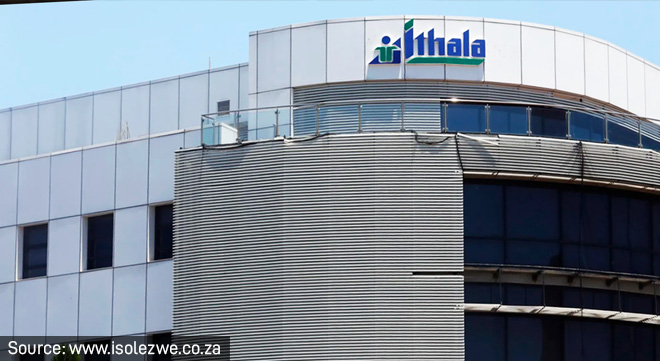
Ithala SOC Limited’s 257 000 depositors, who have been locked out of their bank accounts since January, will finally be able to access their money from 8 December.
KwaZulu-Natal Premier Thamsanqa Ntuli announced the breakthrough during a media briefing on Monday (1 December), confirming that depositors will begin accessing their funds before Christmas.
Ntuli said all legal and administrative agreements required to unlock the repayment process have now been finalised, describing the milestone as “a turning point for Ithala and a commitment to ensuring that such disruptions do not occur again”.
He acknowledged the impact of the freeze, including delayed rent and school fees, halted business operations, and financial strain for many families and enterprises.
National Treasury confirmed on Tuesday (2 December) that, following consultations with the KwaZulu-Natal Provincial Government, it will make up to R2.2 billion available to facilitate repayments.
The payout process will begin on 8 December, with depositors first required to be verified to ensure funds are disbursed to the correct recipients. Once verified, payments will be processed within about two days.
First National Bank has been appointed as the payout bank to manage the process. Depositors will not be required to become FNB clients, and payouts will not take place at Ithala branches. FNB will contact depositors via SMS with instructions and documentation requirements, including an Identity Document, proof of address, and proof of an alternative bank account. Depositors may thereafter visit any FNB branch to claim their funds, which can be done until 2028. Loan holders must continue repayments into a dedicated Absa account.
Ntuli said detailed public instructions will be issued on when and where funds can be collected, which branches and service points will operate, required documents for verification, and support available for vulnerable or elderly depositors.
Communications will be in isiZulu and English and distributed through branches, community radio, traditional leadership structures, government platforms, and social media.
The Premier also cautioned depositors to beware of scammers: “No official is authorised to request any fee to release funds. This process will be fully transparent, lawful, and people-centred,” he said.
Why depositors lost access to their money
Depositors’ accounts were frozen on 16 January, when the Prudential Authority (PA) lodged its notice of motion to liquidate Ithala. Although often called a “state bank”, Ithala has never held a banking licence. Instead, it operated under a series of exemption notices issued in terms of section 1(1)(cc) of the Banks Act, which allowed it to conduct deposit-taking activities that would otherwise be unlawful.
The final exemption notice, issued in July 2022, imposed strict conditions, including a requirement that Ithala obtain authorisation to establish a bank by 30 June 2023. Ithala failed to meet this and several other conditions, including supervisory concerns raised by the PA around governance, prudential compliance, anti-money laundering controls, and operational restructuring.
When the notice lapsed on 15 December 2023, Ithala’s deposit-taking became unlawful. The PA appointed repayment administrator (RA) Johann Kruger to safeguard or return depositors’ funds. Ithala resisted key aspects of the RA’s mandate, setting off a prolonged chain of litigation.
In January, the PA applied for Ithala’s liquidation, citing technical and legal insolvency under the Banks Act. As standard in liquidation proceedings, depositors’ accounts were frozen to prevent a run on the institution and ensure equitable distribution of funds should liquidation proceed.
How the liquidation process is unfolding
The liquidation application is still pending before the High Court in Pietermaritzburg, with no hearing date yet set. In May, Ithala secured a narrow victory when the Court allowed it to resume certain operations but barred it from taking deposits.
The PA and RA have since appealed, arguing that any operational control risks dissipation of depositor funds and undermines the regulatory framework.
Read: Ithala warns court ruling could shut bank before liquidation appeal
Both sides remain engaged in overlapping court processes, including appeals related to the RA’s powers and Ithala’s attempts to resume deposit-taking through new exemption notices or interim court relief.
A bank operating in legal limbo
Ithala’s unusual structure has been at the heart of its challenges. As a provincially owned entity, it cannot hold a standard banking licence.
Although the exemptions were initially meant to be temporary, years of extensions failed to resolve governance, compliance, and operational shortcomings. These include vacancies at board and executive levels, difficulties attracting skilled executives, instability in leadership, weaknesses in anti-money-laundering controls, unresolved IT risks, and a failed core banking modernisation project that resulted in nearly R35 million in wasteful expenditure.
The PA maintains that Ithala’s representations remained largely unchanged despite years of warnings, while Ithala and the KwaZulu-Natal Government insist the institution is solvent, its assets exceed liabilities, and it plays a vital developmental role in rural and township communities.
Ntuli confirmed that a long-term repositioning strategy is being finalised to strengthen governance, stabilise capital structures, and reinforce Ithala’s developmental mandate.
What this means for depositors
This week’s announcement provides the first concrete pathway for depositors to regain access to their funds since the January freeze. The Treasury’s R2.2bn allocation ensures that all depositors can be paid while legal proceedings continue.
For many clients in rural KwaZulu-Natal, Ithala has been their primary transactional account. With the verification and payout mechanism now in place through FNB, depositors can expect a structured, secure, and transparent process.
The broader regulatory and legal battles will continue, but for depositors, the central question that has dominated the past year is finally closer to resolution: their money is now accessible.


Good news
I didn’t a claim at Rustenburg mall on the 10th December 2025, but even now I didn’t get my money
I did a claim on the 10th of December 2025 at RUSTENBURG MALL, BUT EVEN NOW I DIDN’T RECEIVE MY MONEY
SINCE I DID A CLAIM AT NORTH WEST RUSTENBURG MALL ON THE 10TH DECEMBER 2025, EVEN NOW, I DIDN’T RECEIVE MY MONEY, BUT THEY SAID OUR MONEY WILL TAKE TWO DAYS