The Standing Committee on Public Accounts (SCOPA) has raised serious concerns over the Road Accident Fund’s management of two media contracts worth a combined R1 billion, suggesting the Fund may have “been taken for a ride”.
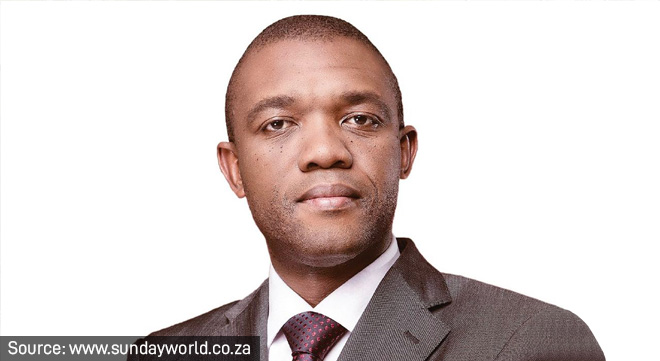
During the committee’s enhanced oversight inquiry into the RAF’s financial management and governance, SCOPA chairperson Songezo Zibi (pictured) said the magnitude and structure of the contracts – each valued at R500 million – “made no sense in the real world” and called for a forensic review into how the contracts were awarded and implemented.
“There is a need to look backwards to see whether the Road Accident Fund has not been taken for a ride,” Zibi remarked.
The inquiry, now in its second week, has been hearing evidence from RAF officials following earlier testimony from the Special Investigating Unit (SIU), National Treasury, and the Auditor-General of South Africa, which painted a picture of weak financial controls and questionable procurement decisions at the Fund.
Two contracts, one questionable split
RAF spokesperson McIntosh Polela and suspended senior marketing manager Hlami Mathye appeared before SCOPA on Wednesday to provide insight into the Fund’s R1bn media spend. The contracts, awarded to MediaMix360 and Dzinge Productions, were meant to support the RAF’s public education and communication efforts – but have now come under scrutiny for irregularities and apparent overspending.
A memorandum tabled at a SCOPA meeting in June detailed how former RAF chief executive Collins Letsoalo rejected the services of the Government Communication and Information System (GCIS), citing high costs. Instead, the RAF went to tender and appointed MediaMix360 for media buying and Dzinge Productions for integrated marketing and communication services.
Both contracts were valued at R500m and are set to run until 2027 and 2028 respectively. However, by March 2025 – just two years into the contracts – nearly R650m of the total R1bn budget had already been spent.
According to the memorandum, “clearly at this rate, what appear already to be bloated contracts will not last the entire duration unless the total contract price is increased”.
Zibi said the committee had been informed that a study comparing the GCIS’s costs with external tenders showed the GCIS to be cheaper. “But by executive decision,” he noted, “the RAF was told to go on tender.”
Mathye told the committee that the two agencies work “in tandem” – with Dzinge developing creative campaigns and MediaMix360 handling placement across radio, billboards, and social media. As marketing head, she said she ensures briefs align with strategic objectives and available budget.
Zibi questioned the logic behind the equal R500m contract split.
“Your biggest expense is on the booking side,” he said. “About 30% of your expenditure is on the creative side. There is no universe where in the same period, a creative and integrated marketing agency runs a similar level of expenditure to a booking firm. Something doesn’t add up.”
The 3% management fee that raised eyebrows
The committee also examined the Dzinge tender, which seemed to have been awarded on price rather than technical merit. Zibi said Dzinge’s bid offered a 3% management fee and a technical score of 70 points – compared with another bidder’s higher 80-point technical score but a management fee of 12% to 15%.
“The really weird thing about this contract,” said Zibi, “is that there is a 3% which is then not defined … when somebody says 3% for this kind of contract, I would fall off my chair. It tells me either they don’t know what they’re talking about, or they’re going to do this kind of thing to make up the number. They can’t make it otherwise.”
He further pointed out that the 3% fee appeared on every invoice, which is “not normal industry practice”.
Polela responded that “finance insisted that each and every invoice had to be accompanied by a management fee”, confirming it was an internal instruction.
Invoices under scrutiny
To demonstrate irregular pricing, Zibi cited several invoices from Dzinge, including one for 1 000 branded transparent bottles at R85 each, and another for 680 golf shirts at R409 each.
“What do you think of the unit price?” Zibi asked.
Polela replied, “It does seem exorbitant, my lord.”
Zibi remarked that the RAF’s budget appeared to have been “externalised”, with procurement decisions “opaque on the other side”.
“They can do whatever they like, and we don’t know whether they are not actually buying it from their cousin,” he said. “It’s possible that you have been overcharged on numerous items, and you really wouldn’t know.”
Polela conceded the point, saying, “We would have to look at these and go back and find out. But I do accept your point, and we do have some serious lessons to learn from these.”
Runaway spending and lack of oversight
On the MediaMix360 contract, Zibi questioned how the RAF’s spending ballooned from R18.5m in one financial year to more than R161m the next, saying he knew of “no organisation that exceeds a budget by that much”.
Polela defended the increased expenditure, explaining that he had informed the RAF board that spending would rise in the first two years of his taking his position, to expand public education efforts.
He said the Fund needed to run “as many campaigns as possible” to inform claimants and the public about their rights, adding that unplanned campaigns, such as one addressing claim backlogs costing more than R30m, had further driven up spending.
However, Zibi questioned the RAF’s monitoring systems. When asked whether there was an agency to verify that paid-for adverts actually aired, Mathye admitted, “Currently we do not have in terms of the monitoring side of things, but we used to have.”
Polela confirmed that the RAF’s media monitoring only covers “articles” and “doesn’t go that deep”.
“So, you don’t know how much of the ads you’ve paid for have actually played?” Zibi asked. “Already, in this short time, we’ve identified so many gaps in these contracts. They need to be looked at with a forensic lens.”
He said SCOPA would deliberate on further action and make representations to ensure transparency in the RAF’s dealings.
“It is particularly important that the Road Accident Fund gets sight of who these agencies spend money on, and whether there are no conflicts of interest therein,” Zibi said. “Because with them, it’s a free for all.”