National Treasury has pushed back against calls for higher taxes on the wealthy, saying South Africa has a very progressive tax system and improved collection by the South African Revenue Service should drive additional revenue.
On 21 November, National Treasury responded to comments on the Medium-Term Budget Policy Statement (MTBPS) at a joint meeting of the National Assembly’s Standing Committee on Finance and the National Council of Provinces’ Select Committee on Finance.
Finance Minister Enoch Godongwana painted a picture of fiscal strain moderated by tentative improvements in revenue projections and slightly better-than-expected economic resilience. The MTBPS emphasised the government’s ongoing efforts to restore fiscal sustainability through cautious consolidation, without curtailing support for vulnerable households.
Crucially, Treasury signalled that the proposed R20 billion in additional tax measures for the 2026 Budget may no longer be required. Final corporate income tax collections will determine whether the measures can be withdrawn.
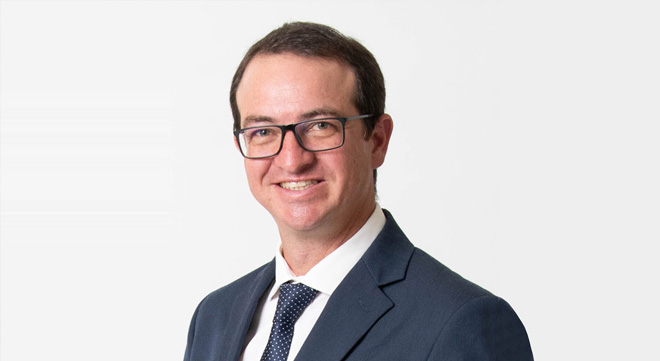
Christopher Axelson (pictured), Treasury’s deputy director-general for tax and financial sector policy, told the committees that Treasury avoids making tax policy announcements in the MTBPS; these are usually reserved for the Budget in February. The main goal of the MTBPS is to update Treasury’s revenue estimates and the fiscal framework over the next three years.
However, whenever the Minister of Finance presents the MTBPS, Treasury receives many proposed changes to tax policy for inclusion in the Budget.
Among the proposals made in stakeholder presentations on this year’s MTBPS were to increase the corporate income tax rate, take stronger measures to combat illicit financial flows, introduce a progressive net wealth tax, strengthen income and property taxation, increase personal income taxes on high-income earners, increase inheritance and estate taxes, reduce tax breaks for high-income earners, remove the medical tax credits, review tax incentives, increase the Health Promotion Levy rate to 20%, align the excise duties on alcohol and tobacco with the Consumer Price Index, and strengthen enforcement.
Axelson said Treasury will consider these proposals, but it must still assess whether it will be necessary to raise additional revenue.
“The big revenue month for us is December.” At the beginning of January, once Treasury has the figures, “we will see what has happened with the corporate income tax collections because a lot of those payments are made within December, and then we can assess whether we need additional revenue or not, and we can consider a lot of these measures, as we do each year”.
Axelson said Treasury receives calls to increase taxes on higher-income earners every time it briefs Parliament’s finance committees on the MTBPS and the Budget.
“It comes across as if our [tax] system isn’t progressive, but it is. And we’ve spent 10 years of increasing tax rates on higher-income earners, reducing loopholes, getting rid of any mechanisms that high-income earners can use to reduce tax, which has led to us now having one of the most progressive tax systems globally.”
South Africa is among the top five countries in terms of how much personal income tax (PIT) is paid as a share of gross domestic product. South Africa’s top marginal tax rate is one of the highest in the world – far higher than those in developing economies and comparable with those in developed economies. There have also been large increases in the rates of estate duty, transfer duty, capital gains tax, and dividends tax.
“So, in our view, the system is already very progressive and particularly because of those direct taxes. A lot of that revenue goes to the 60% that is spent on the social wage.”
He said 12% of personal income taxpayers contribute more than 60% of PIT, which is Treasury’s largest revenue item.
“So, we think we do need to be cautious about these calls, and even if we haven’t made a change, for example, in the last Budget on adjusting these rates, it’s not because the system is not progressive. It is, and it needs to be seen within that context.”
Although Treasury will consider the proposals for the 2026 Budget, its position is that continuing to increase tax rates is not the best course of action.
He said Treasury would prefer to obtain additional revenue from improvements at SARS and other mechanisms.
“This is a far superior method of increasing revenue in our perspective than increasing tax rates.” As part of those efforts, Treasury has been providing additional resources to SARS to recover tax debt and invest in new technology and mechanisms to reduce the tax gap.
Axelson said Treasury has done “quite a bit of work” in the G20 this year on, for example, trying to share more information with other countries on real estate, as well as trying to push for sharing information on beneficial ownership, “so that we can close down mechanisms that high-net-worth individuals could potentially use to not pay the tax that is due, and that’s where a lot of our effort is going towards”.
Illicit trade remains a priority target
Axelson also addressed mounting concerns about the impact of illicit trade – particularly in tobacco – on revenue performance. He said SARS plans to intensify its enforcement efforts through enhanced regulation, tougher penalties, targeted prosecutions, strengthened licensing processes and centralised project management of identified cases.
These initiatives form part of the broader consideration of excise-duty adjustments for the 2026 Budget. Treasury will weigh submissions from industry stakeholders alongside public-health objectives and revenue needs, he said.
Revenue outlook brightens – but risks remain
Industry analysis suggests that Treasury’s revenue picture has improved meaningfully since the February Budget. Deloitte Africa’s Itireleng Kubeka and Greg Rammego noted that Treasury has revised its 2025/26 gross tax estimate upward by R19.7bn, supported by firmer household spending and a marked intensification of SARS’s campaign against fraudulent VAT refunds.
They highlighted that the R4bn allocated to SARS in the 2025 Budget is projected to bolster annual debt-collection returns by between R20bn and R50bn a year, with further gains expected from tougher enforcement actions in areas such as illicit trade.
Corporate income tax and dividend tax are also outperforming expectations, buoyed by robust activity in the trade, electricity, and finance sectors. But despite the relatively positive momentum, gross revenue is still forecast to fall about R15.7bn short of the original 2025 Budget estimates over the next two years. Treasury’s modest downward revisions to corporate and personal income tax expectations reflect softer profitability and slower wage growth.
Nonetheless, lower inflation, lagged effects of interest-rate cuts, and tentative improvements in consumer confidence could help to lift household spending and push VAT receipts slightly above levels forecast at the start of the year.
On the expenditure side, Treasury has proposed R15.8bn in additional spending for the current year to address priority pressures. Over the medium term, the social wage remains dominant, accounting for 61% of consolidated non-interest expenditure – a signal, the analysts say, of the government’s continued commitment to shielding low-income households from economic volatility.