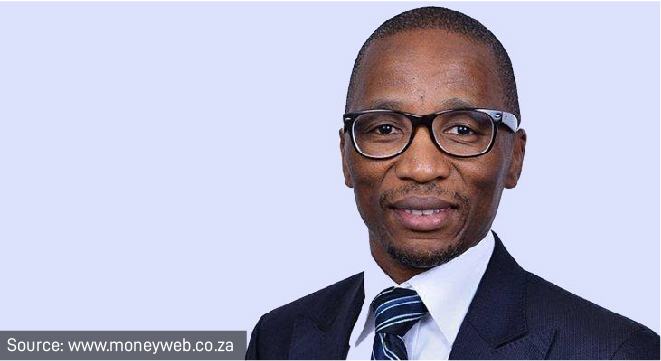
The South African Special Risk Insurance Association can comfortably absorb a catastrophe event claim of up to R20 billion – above that, it will have to ask the state for assistance, SASRIA’s chief executive, Mpumi Tyikwe (pictured), told Parliament last week.
SASRIA, the state-owned insurer that covers riots, civil commotion, strikes, and terrorism, briefed the National Assembly’s Standing Committee on Finance on its 2024/25 annual report on Friday.
SASRIA required a R22bn equity injection from National Treasury in 2022 after it incurred gross claims of R34bn because of the unrest in KwaZulu-Natal and Gauteng in July 2021.
Dirk Kunz, the chief financial officer, said although SASRIA’s profitability has been very good over the past three financial years, it has yet to recover from the loss of R24.294bn incurred in 2021/22 because of the unrest claims.
SASRIA saw its profit rise by 34.1% to R4.469bn in 2024/25, which, Kunz said, added considerably to its target of achieving reserves of R30bn by the end of 2029.
SASRIA had a net equity position of R18.612bn at the end of 2024/25. Total assets increased by 27.1% to R20.914bn, while liabilities declined by 0.4% to R2.302bn.
Gross written premiums rose by 8.77% to R5.851bn – more than doubling since 2020/21.
Insurance revenue rose by 9.7% to R5.76bn, slightly below the targeted premium growth of 10%. Gross claims incurred rose by 38.4% to R666 million, with a claim ratio of 11.6%. The net reinsurance expense fell by 55.4% to R592m, leaving a net insurance result of R2.949bn, which was 48.9% higher than in 2024.
SASRIA attributed the decline in the net reinsurance expense to lower reinsurance placements in a hardened reinsurance market and a revised quota-share arrangement, which reduced the ceding rate – the portion of obligations that are transferred to reinsurers –from 42.4% to 20%.
Net investment income rose by 26% to R1.267bn because of increased assets under management, high interest rates and “strategic asset allocation”.
Emerging risks
Tyikwe told the committee that the risks SASRIA insures are hard to predict. However, SASRIA has identified the following material emerging risks that could affect its performance:
- Systematic failure of public infrastructure.
- Geopolitical instability, including conflicts in Israel/Palestine and Russia/Ukraine, which affect SASRIA’s reinsurance premiums.
- Political instability in South Africa related to the challenges of managing coalition governments at the national and provincial levels.
- Labour market instability, including demands for higher salary increases.
- An uptick in “non-connected” disruptive events, such as food poisoning incidents and violence related to illegal mining and disputes in the taxi industry.
- An increase in the frequency and severity of extreme weather events, which, although not insured by SASRIA, contribute to social unrest.
- Low economic growth and high unemployment.
There has been in an increase in the number of protests globally, the causes of which include “the failure of political representation”, the Israel/Palestine war, and campaigns for economic justice and an end to austerity, Tyikwe said.
He drew attention to the leading role played by the youth in recent anti-government protests in Tanzania, Nepal, Madagascar, Bangladesh, and Kenya.
“I think the message that I’m sending to honourable members is that the Millennials and the Gen Zs in particular are ready to go out to the streets to express themselves, and this often creates havoc in governments of the day.”
There has been a steep increase in the number of recorded “unrest events” – protests, riots, violence against civilians – in South Africa over the past five years. However, to put this increase in context, many of these events are small and non-violent – for example, there is usually a group of people protesting outside the Houses of Parliament every Friday.
Tyikwe said SASRIA is monitoring the following risks in the current financial year:
- Illegal mining (zama zamas). SASRIA is concerned that of the 2 600-plus people who have been arrested for illegal mining, 81% of them are in South Africa illegally, and they often have guns and explosives, which could be used for other things other than illegal mining.
- How instability in the leadership of the South African Police Service might affect the police’s ability to respond to unrest on a scale similar to that seen in July 2021.
- Xenophobic attacks related to access to public healthcare and education.
- South Africa’s hosting of the G20, although security will be heightened during this period.
- Conflict related to water shortages.
- Unrest associated with unemployment. He referred to the protests that took place in Rosslyn Industrial Park in September, when residents from neighbouring communities demanded jobs.
- The upcoming local government elections.
SASRIA is gathering a lot of data so that it can better understand the risks and is sharing information with the government’s security cluster, “so that South Africa can be better prepared for any event that involves protests”, he said.
The insurer is also trying to reduce the risks the country faces through corporate social investment – spending and investing in communities that it regards as high risk – and by building strategic relationships with the security cluster, data and intelligence providers, and corporate clients.