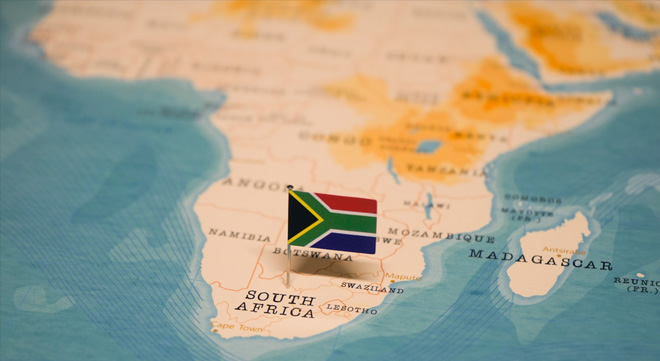
South Africa has been ranked 145th out of 226 countries in the newly launched Global Investment Risk and Resilience Index, a collaborative initiative by Henley & Partners and AlphaGeo that aims to redefine how investors interpret national stability and opportunity.
The index evaluates countries’ exposure to geopolitical, economic, and climate risks, and their ability to adapt and recover from shocks. Its developers say the result is a data-driven view of how resilience – increasingly concentrated in smaller and more agile nations – is shaping global competitiveness and long-term value.
Designed for investors, policymakers, and governments, the index provides a framework for navigating an era of inflationary pressures, geopolitical conflict, climate volatility, and rapid technological disruption. By combining risk exposure and resilience capacity into a single score, it identifies which markets are best placed to preserve wealth and sustain growth in uncertain times.
A new geography of resilience
In a joint commentary accompanying the index launch, Dr Christian Kaelin, chairman of Henley & Partners, and Dr Parag Khanna, founder and chief executive of AlphaGeo, describe the emergence of a “new geography of risk and resilience”. They note that the world has entered a complex system where military conflicts, economic rivalries, technological upheavals, and climate events interact in unpredictable ways, producing cascading effects across borders.
“Such is the Darwinian condition of the world today: survival of the fittest,” they write, quoting Charles Darwin’s reminder that “it is not the strongest of the species that survives, nor the most intelligent – but the one that is most adaptable to change”. Adaptability, they emphasise, is the essence of resilience.
Kaelin and Khanna say the Covid-19 pandemic accelerated global interest in resilience but measuring it has remained difficult. Although numerous indices catalogue risk, few offer a holistic framework to quantify a nation’s ability to withstand and recover from disruption. The new index aims to fill that gap by integrating macro-economic, financial, political, social, and technological indicators – from inflation and governance to innovation and climate adaptation.
Benchmarking these attributes, they argue, helps countries to identify strengths and vulnerabilities and learn from their peers. Measuring both risk and resilience provides a fuller picture of national stability and attractiveness for investors and migrants alike.
They note that the highest-ranking countries span multiple continents, showing that resilience is not limited to the wealthiest or most politically stable nations. “In an age of persistent volatility,” they write, “measuring national resilience could supersede narrow measures of wealth or biases towards types of government.”
Adaptation itself has become the ultimate investment strategy: societies that prioritise good governance, innovation, and climate readiness will be best positioned to attract investment and create long-term value.
Where South Africa stands
South Africa’s overall score of 55.51 out of 100 places it in the Risk Watchlist category. Its risk score of 35.2 (high) and resilience score of 46.2 (medium) indicate that although the country faces substantial political, economic, and climate-related exposure, it retains a moderate capacity to absorb shocks.
The data paint a mixed picture. South Africa performs relatively well on inflation (0.14) and currency volatility (0.20) but poorly on political instability (0.54) and legal and regulatory risk (0.50). Its physical climate risk score of 0.38 signals notable environmental vulnerability.
On the resilience side, strengths include climate resilience (0.64) and fiscal policy space (0.56), suggesting some institutional ability to manage shocks. However, weaker outcomes in social progress (0.36), investment (0.30), and governance quality (0.43) highlight persistent structural and social challenges.
Economist and investment manager Andrey Movchan, founder of Movchan’s Group, says these results mirror South Africa’s entrenched political and economic headwinds.
“South Africa records a total resilience score of 46.2 out of 100 (medium) – reflecting not only its social and political challenges but also its structural economic vulnerabilities,” he notes. “The country remains heavily dependent on international trade, which accounted for 61.7% of GDP in 2024, and is further constrained by volatile climate conditions, limited economic diversification, a persistent current account deficit, and a weakening currency.”
He adds that the country’s high-risk score “underscores the impact of political instability, very high crime levels, governance inefficiencies, and weak regulatory quality”.
At the same time, Movchan acknowledges South Africa’s strategic advantages as a major supplier of mineral resources to China, India, Japan, and the United States, benefiting from maritime access and its dominant position in Southern Africa. However, he cautions that unless the country addresses its social issues, enhances governance, and diversifies its economy, “its economic future looks rather gloomy”.
What top performers get right
While South Africa’s position places it in the lower half of the index, the world’s top performers illustrate what balanced resilience looks like. According to AlphaGeo’s data, Switzerland, Denmark, Singapore, Sweden, and Norway lead the global rankings, with total scores above 80.
Switzerland tops the index, with 88.42 points, combining a remarkably low risk score of 9.1 with very high resilience (85.94). Its diversified economy, strong governance, and world-leading innovation performance have helped it to secure the number-one spot on the World Intellectual Property Organization’s Global Innovation Index for 15 consecutive years.
Denmark (85.09) ranks second, excelling in governance, climate resilience, and social progress, while Norway follows in third with robust institutions and adaptive social systems. Singapore and Sweden round out the top five, both combining very low risk with very high resilience – the result of consistent regulation, innovation, and climate leadership.
AlphaGeo notes that smaller nations such as Luxembourg, Finland, the Netherlands, Germany, and Iceland also feature prominently, showing that institutional quality and adaptability matter more than economic scale.
Bridging risk and resilience
For Professor Khalid Koser, founding executive director of the Global Community Engagement and Resilience Fund (GCERF) and professor of conflict, peace, and security at Maastricht University, the index sheds light on how exposure to shocks and the ability to absorb them are unevenly distributed.
He says the data reveal a clear pattern: countries with higher risk scores also tend to have lower resilience scores. “These are predominantly low-income nations,” he explains, “where a major development challenge is attracting overseas investment to drive employment, growth, and better integration into the global economy. Yet the same countries that most urgently need investment are often the least able to attract it.”
Koser notes that investors typically avoid high-risk environments due to insecurity, volatility, weak governance, and fragile institutions – even though social stability and trust are as critical as infrastructure.
“The best way to reduce these risks is to build resilience,” he says. “Building resilience is therefore not just a social priority – it is a key strategy for mitigating investment risk. But this creates a self-reinforcing trap: without investment, countries cannot build resilience; without resilience, they cannot attract investment.”
This paradox, he adds, is particularly visible in the green transition, where demand for rare-earth minerals – vital for renewable energy and digital technologies – is concentrated in high-risk regions such as parts of sub-Saharan Africa. The suspension of LNG projects in northern Mozambique illustrates how instability can directly undermine economic potential.
Drawing on the GCERF’s decade of field experience, Koser argues that resilience is best built from the ground up. Local investments in social cohesion, equitable opportunity, and community agency have reduced the risk of radicalisation and strengthened trust between communities and authorities, enhancing legitimacy and governance.
“These investments create a virtuous circle,” he says. “Countries at high risk have every incentive to lower that risk – both to protect their citizens and to attract investment. The most cost-effective way to do so is to build resilience, particularly at the community and societal levels. Over time, focusing on the ‘resilience’ column of the index will have a positive upstream effect on the ‘risk’ column.”
Koser believes the Global Investment Risk and Resilience Index offers more than a diagnostic – it provides a roadmap for collaboration between policymakers, investors, and communities to shift countries “from a cycle of fragility to one of confidence and growth”.