A recent judgment from the High Court in Mthatha has confirmed that the presumption of negligence under section 25 of the Electricity Regulation Act does not apply when no credible evidence of the cause of a fire is presented.
Section 25 of the Act creates a limited form of strict liability for electricity licensees, such as Eskom, when damage is linked to the electricity they generate, transmit, or distribute. It is typically invoked in claims for fires, property damage, or injuries allegedly caused by electricity. But the law does not automatically hold utilities liable; claimants must show credible evidence connecting the damage to the electricity supplied.
On the day of the fire
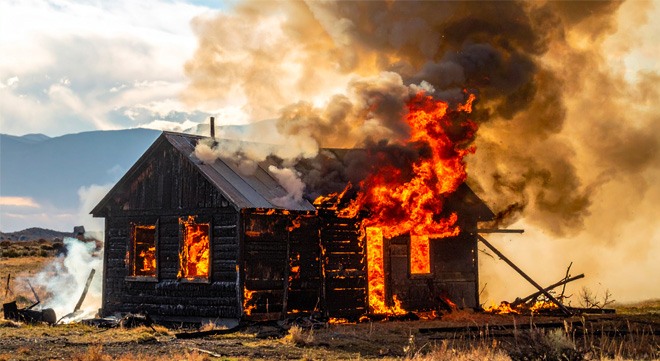
In Mlonyeni v Eskom Holdings, Nozukile Mlonyeni sought R1.5 million in damages, alleging a fire at her rural home – which broke out in 2020 – was caused by the bursting of her electric meter box. According to her claim, the fire was uncontrollable, bypassed the electric breakers, and destroyed her main house, along with a separate rondavel on the property.
Mlonyeni alleged multiple failings by Eskom, including insufficient warning signs near the meter box, poor maintenance of poles and distribution cables, failure to take reasonable steps to prevent harm, delayed response to emergency faults, and absence of protective mechanisms to safeguard her property.
Eskom denied any breach of duty, arguing it did not cause the fire or the losses claimed. The trial proceeded without separating issues of liability and damages, following a pre-trial conference in February 2024.
Mlonyeni testified she had returned from church and was changing clothes when she heard a loud bang from the kitchen area where the meter box was located. She said she ran outside to find the fire spreading, destroying furniture, appliances, and important documents. She further stated that Eskom personnel visited shortly afterwards, and she informed them the fire had started at the meter box.
However, evidence presented on her behalf included a report by Ronaldo Same, which stated that no one was present in the house when the fire started, making it impossible to determine the cause. Same noted strong winds contributed to the fire spreading and observed that the Mineral Insulated Cable (MCB) in the meter box did not show any stripping.
Eskom called senior technical official Ncebakazi Dyalvane, who testified that she received a report on 10 August 2020 of a burnt cable at KNRQ003 linked to a house fire. She said she visited the site, observed a downed cable, and assessed the damage. According to her, Mlonyeni informed her that no one was present when the fire began. During cross-examination, the timing of Dyalvane’s site visit and who attended were questioned, but she maintained that she was present on 10 August 2020.
Claimants relying on section 25 bear the onus
The court evaluated the conflicting accounts and found material contradictions in Mlonyeni’s evidence, particularly between her testimony and the assessor’s report. Acting Judge Nolubabalo Cengani-Mbakaza applied the “reasonable person” standard for negligence, citing Kruger v Coetzee:
“For purposes of liability culpa arise if—
(a) A diligens paterfamilias in the position of the defendant—
(i) would foresee the reasonable possibility of his conduct injuring another in his person or property and causing him patrimonial loss; and
(ii) would take reasonable steps to guard against such occurrence.
(b) the defendant failed to take such steps. This has been constantly stated by the court for some 50 years. Requirement (a) is sometimes overlooked. Whether a diligens paterfamilias in the position of the person concerned would take any guarding steps at all, and if so, what steps would be reasonable, must always depend upon the particular circumstances of each case.”
Applying this standard, the judge found the presumption of negligence under section 25 had been rebutted. There was no evidence that Eskom failed to display warning signs, maintain electric poles, prevent harm, prioritise emergency faults, or install protective mechanisms. The cause of the fire remained unknown, and the MCB’s intact condition suggested cable integrity had been maintained. The claim was therefore dismissed, with each party ordered to bear its own costs.
Donald Dinnie, director, and senior associate Kriyanka Reddi, writing on Norton Rose Fulbright’s website, highlighted that claimants relying on section 25 bear the onus of proving that the cause of the fire was electricity supplied by the defendant.
“In this instance, there was no proof that any lack of warning signs, maintenance practices, or safety devices was related to the cause of the fire, nor was there evidence that a response delay caused any loss. In the absence of such proof, the deeming provision in section 25 did not apply and could not be relied on by the claimant.”
Dinnie and Reddi noted that the judgment is a reminder that section 25 does creates strict liability only where credible evidence is placed before the court that the damage was caused by induction, electrolysis or electricity which was generated, transmitted or distributed by the licensee sued.