It seems third time’s a charm.
The National Assembly on Wednesday approved the 2025 Appropriation Bill during its plenary sitting, ending months of fiscal uncertainty and bringing South Africa’s Budget impasse to a close.
The passage of the Bill follows a series of failed attempts earlier this year to bridge the fiscal gap, initially flagged in the Budget Review on 19 February. In that document, the government proposed scrapping inflation adjustments to personal income tax brackets and increasing VAT by two percentage points to 17%. The proposals were swiftly rejected.
By March, National Treasury returned with a more modest plan: a one-percentage-point VAT hike, to be phased in over two years. That too was withdrawn, amid fierce political and legal opposition.
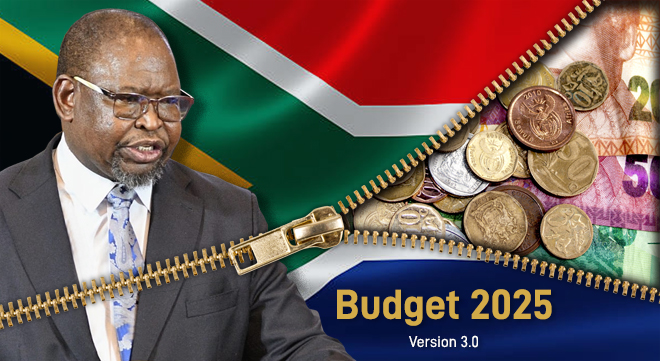
Finance Minister Enoch Godongwana reintroduced the Budget – including the Appropriation Bill – on 21 May, projecting just R18 billion in additional tax revenue for 2025/26. This was a steep drop from the R58bn envisaged in February and even the R28bn forecast in March.
Read: Budget gap widens as revenue projections slide
The Bill was subsequently referred to the Standing Committee on Appropriations, which considered it and reported back to the National Assembly.
In a statement released following the National Assembly’s approval, Parliament explained that the Appropriation Bill forms a critical part of the national budget. It determines how public funds are allocated across departments, in line with section 27(1) of the Public Finance Management Act, which requires the annual budget to be tabled before the start of the financial year, or as soon as possible thereafter in exceptional cases.
Total government spending for the 2025/26 year is set at R2.3 trillion. Of this, R1.17 trillion will be allocated to national departments, including health, education and police. A further R1.1 trillion will go towards social grants, transfers to provinces and municipalities, and debt servicing.
“Even though the Bill proposes the allocation of resources across the national sphere of government, 72.2% of these allocations go into transfers and subsidies. These are transfers to provinces, municipalities, public corporations, and other non-profit making entities,” the statement read.
Over the next three years, an additional R180bn has been earmarked for infrastructure upgrades, salary increases for public servants, the extension of the Covid-19 Social Relief of Distress Grant, hiring unemployed doctors and teachers, and improving public transport.
As required by section 4(4)(c) of the Money Bills Amendment Procedure and Related Matters Act, the committees on appropriations of both Houses of Parliament consulted with the Financial and Fiscal Commission (FFC) during the Bill’s processing. The committees also invited input from the Parliamentary Budget Office (PBO) and several government departments.
In its comments, the FFC cautioned against underfunding departments such as trade, science, and small business. The PBO urged for better alignment between spending and policy outcomes such as poverty reduction and economic growth. It also called for a review of overlapping mandates among institutions, suggesting that where duplication exists, the enabling legislation should be revisited.
“The approval of this Bill is important, as it authorises government spending for the upcoming financial year, to ensure that critical services and government operations are not disrupted,” Parliament said.
The Bill now heads to the National Council of Provinces for concurrence. If approved, it will go to the President for assent – the final step before departments can begin spending in accordance with the new Act.