
Peter is 57, single, and has no children. He has a global share portfolio worth US$500 000, funded by an inheritance from a non-resident family member. He plans to leave his wealth to his brother’s three children: a 23-year-old doctor living in Australia, a 19-year-old in South Africa, and a 15-year-old who intends to study overseas.
If Peter walked into your office, where would you start? With the portfolio’s performance and fees, or with what happens to the investment when he dies?
His beneficiaries live in different countries, one is a minor, and his offshore investments may expose his estate to foreign tax and succession rules. A structure that works well for Peter during his lifetime may not be the simplest or most tax-efficient way for his beneficiaries to inherit his wealth.
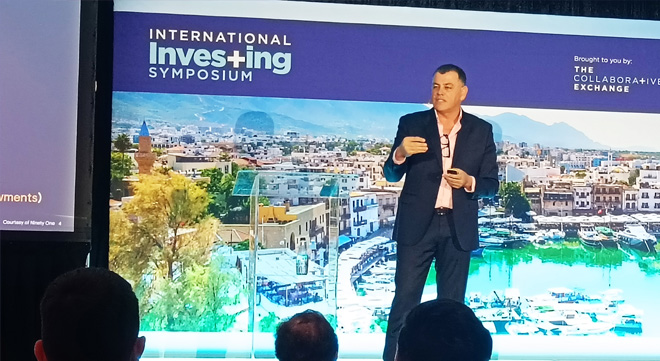
This was the scenario Albert Coetzee (pictured) of Albert Coetzee Consult used at the International Investing Symposium in Cape Town to explore the role of policy wrappers in offshore planning. His presentation, Policy wrappers – Situs tax and beneficiary nomination considerations, compared endowments and sinking funds with other ways of holding offshore investments.
Coetzee encouraged advisers to look beyond the investment itself and consider the “unintended consequences” of the structure they recommend. If the client dies, how long will it take for beneficiaries to access the investment? What will the process cost, and from where will any tax liability be paid?
These are questions advisers need to ask when choosing a structure, rather than leaving beneficiaries to discover the answers after the client’s death.
That does not mean advisers need to become experts in every aspect of offshore policy structures. There are too many variables, and the rules can differ between providers and countries. What matters is knowing which questions to ask, where the potential pitfalls lie, and when specialist advice is needed.
Describing his role when working with advisers, Coetzee said it was “just to create doubt”. In other words, he wants advisers to question whether a proposed arrangement could have consequences they have overlooked.
Advisers do not have to work through every legal or tax implication themselves. But they need to know enough to recognise potential problems, whether these involve situs tax, beneficiary nominations, or a client moving abroad. Knowing when to bring in a fiduciary, legal, or tax specialist is part of giving sound advice.
First, establish where the tax exposure lies
Situs refers to the place where an asset is legally considered to be located. That location can determine which jurisdiction has the right to tax it when its owner dies.
For South African investors, US shares and certain UK assets can create particular concerns. Coetzee highlighted headline inheritance or estate tax rates of up to 40% in both jurisdictions, compared with South Africa’s estate-duty rates of 20% and 25%.
The actual liability depends on the relevant rules and the investor’s circumstances. For example, US estate tax has specific provisions for non-resident, non-citizen owners, including a US$60 000 filing threshold for certain US-situated assets.
The adviser’s first task is to establish exactly what the client owns. An offshore portfolio may contain different asset types, each with its own tax and succession implications. The client’s country of residence, citizenship where relevant, and intended beneficiaries also need to be considered.
A policy wrapper may help to address situs exposure. Instead of owning the underlying investments directly, the investor owns a long-term insurance policy issued by a life company. Depending on the product and applicable law, this can change the situs-tax position because the investor holds the policy rather than the underlying shares.
An offshore trust or another ownership structure may also be worth considering, but each comes with its own tax and administration costs.
Coetzee flagged the UK’s 10-year anniversary charge on certain trusts. This is a periodic inheritance tax charge that can arise every 10 years on the value of assets held in a trust, with the rate capped at 6%. The actual rate depends on the trust’s circumstances, including its assets, available reliefs, and previous transfers. A separate exit charge may also apply when assets leave the trust. These costs need to be factored into the comparison before an offshore trust is chosen as a way to manage situs-tax exposure.
A policy is not an automatic exemption from foreign tax. Before recommending one, the adviser needs to establish whether it achieves the intended result for the particular assets and jurisdictions involved.
What should happen when the client dies?
Once the assets and potential tax exposure are clear, the next question is how the investment will pass to the beneficiaries.
With directly held assets, the estate may have to deal with foreign probate or other legal processes before the beneficiaries can take ownership. This can cause delays and additional costs.
A policy with a valid beneficiary nomination may allow the proceeds to pass directly to the nominated beneficiary, potentially avoiding the conventional estate-administration process for that investment and the associated executor’s fees.
Coetzee said he was “very fond of beneficiary nominations” but immediately cautioned advisers to pay attention to the differences between providers. Although products may fall under the same legislation, providers can interpret and apply nomination provisions differently.
That matters because a beneficiary nomination does not necessarily work the same way across every platform or policy.
Advisers need to establish what the beneficiary will receive. Depending on the policy, the beneficiary may receive the proceeds in cash or take over the policy and keep the investment in place.
The difference can affect what happens next. If the policy continues when ownership passes to the beneficiary, the transfer does not necessarily trigger the same immediate capital gains tax event as selling the underlying investments. A later withdrawal or surrender may have different tax consequences, depending on the circumstances and policy terms.
South African estate duty remains a separate issue. A policy may still be relevant to the estate-duty calculation even where its proceeds pass directly to a beneficiary.
Coetzee also emphasised the value of alternative or secondary beneficiaries. If the primary beneficiary dies before the policyholder, the adviser needs to know who will inherit instead and what the policy provides for in that situation. Joint beneficiaries can create further complications if they disagree about whether to retain the investment or take the proceeds in cash.
These details should be settled when the policy is taken out. Advisers should check the nomination provisions, ownership arrangements, and what happens on the death of each relevant party rather than assume all providers offer the same options.
Endowment or sinking fund?
Both endowments and sinking funds are policy wrappers, but they do not operate in the same way.
An endowment has a policyholder and a life assured. Subject to the policy terms, it pays out on the death of the last life assured. A sinking fund does not have a life assured in the same way.
Choosing between the two also means looking at who owns the investment and what should happen to it when they die. An arrangement that works for an individual may not be suitable for a company or trust.
Coetzee’s advice was to examine the product itself. Does the nomination transfer ownership of the policy or pay out the proceeds? Can an alternative beneficiary be named? Are joint holders permitted? What happens if one beneficiary wants to cash in while another wants to retain the investment?
These are not minor administrative details. They can determine whether the structure works as intended when the client dies.
The tax comparison: what do the numbers tell you?
Coetzee compared the tax treatment of an individual policyholder fund with investments held directly by an individual.
The rates cited in his presentation were 30% on taxable income in an individual policyholder fund, compared with a maximum individual income-tax rate of 45%. He also cited an effective CGT rate of 12% within the policyholder fund, compared with a maximum effective rate of 18% for an individual.
The 12% figure is calculated by applying the 40% capital gains inclusion rate to the 30% policyholder-fund tax rate. For an individual taxed at 45%, the same inclusion rate produces an effective CGT rate of 18%.
These are maximum or applicable rates, not necessarily the tax an individual investor will pay. An individual’s actual income-tax rate depends on their taxable income, and the treatment of a policy depends on the relevant fund and policy terms.
Coetzee pointed out that many offshore portfolios use accumulation funds, where income is retained in the fund rather than paid out. In those cases, the tax advantage of investing into a policy is more advantage as the quoted 30% on income tax does not apply as there is no distributions to tax.
A policy may simplify administration because tax is calculated and paid within the policyholder fund. But advisers must weigh that convenience and any potential tax advantage against the cost of the policy and the client’s circumstances.
There may also be an immediate tax cost to changing structures. Transferring existing investments into a policy can trigger a CGT event because ownership of the underlying assets changes. That liability needs to be calculated before the client moves the money.
Nor does a policy wrapper automatically remove South African estate duty. SARS levies estate duty at 20% on the first R30 million of the dutiable estate and 25% on the dutiable value above R30m, after allowable deductions and the R3.5m abatement.
The adviser needs to compare the likely tax treatment over the life of the investment, the cost of moving assets, and the eventual transfer to beneficiaries. One headline rate cannot answer all those questions.
What about the five-year rule?
The five-year restriction period associated with endowments is often a concern for clients who may need access to their money.
Coetzee argued that it need not rule out a policy, particularly in offshore planning where multiple policies or a loan facility may offer some flexibility. The options available depend on the product on offer by the relevant product provider.
During the initial five-year period, withdrawals and loans are restricted. The permitted amounts are generally linked to contributions and prescribed growth, while additional contributions over the prescribed maximum limits (120%) can affect the restriction period. Advisers need to check the precise rules and conditions rather than assume a client can access the capital whenever needed.
Coetzee also pointed out that creditor protection may continue for five years after the policyholder’s death, but only for certain beneficiaries, such as a spouse, parent, child, or stepchild. Whether this protection applies when an offshore trust is nominated needs to be checked against the specific arrangements.
The practical question is whether the client can live with the restrictions and whether the policy’s facilities meet their likely needs. A loan facility may help, but the adviser should check whether interest is charged, what can be borrowed, and what happens to the facility if the policyholder dies.
When is a policy wrapper the wrong choice?
A policy wrapper will not suit every client.
Someone who needs regular, unrestricted access to capital may find the restrictions too limiting. Additional contributions can also affect the five-year period, so clients who expect to add money at different stages need to understand the implications before committing.
Age and health should be considered in the context of the client’s objectives, rather than used as automatic reasons to reject a policy. A client who is older or seriously ill may still have a succession-planning need, but the costs, terms, and intended beneficiaries must be assessed carefully.
Foreign beneficiaries can complicate matters, too. In Peter’s case, the Australian beneficiary may not be able to continue holding the policy in the same way after his death. The tax consequences in Australia would need to be checked, while the minor beneficiary raises questions about who can receive or manage the investment, and if the minor will be allowed to keep the funds or policy offshore once inherited.
Coetzee’s proposed solution was to split Peter’s investment between two structures. One-third would go into a Guernsey nominee portfolio, with the remaining two-thirds held in a Guernsey-domiciled policy.
The split addressed two complications. The Australian beneficiary might not be able to continue holding the policy after Peter’s death, while the 15-year-old beneficiary could face restrictions on holding offshore assets. Coetzee proposed naming the minor’s father as beneficiary of the relevant portion, with the intention of changing the nomination when the child reached adulthood.
Coetzee acknowledged that the arrangement might seem elaborate. “You may say we’re overcomplicating life matters,” he said, but this is what is expected from advisers to consider when dealing with high-net-worth clients and families.
The point was not that every client needs multiple structures. It was that the beneficiaries’ circumstances can make a single solution unsuitable. The arrangement would need to be checked against the relevant legal and tax rules, particularly the Australian beneficiary’s position and the arrangements for the minor.
If the client plans to move overseas, the adviser needs to check how the policy will be taxed in the new country. Leaving South African tax residency can also have tax consequences, so this needs to be considered before the client decides to keep the policy or move the investment elsewhere.
Adviser checklist: questions to ask before recommending a policy wrapper
Before recommending an endowment or sinking fund for offshore investments, check the following:
- Where are the assets held? Identify potential US or UK situs-tax exposure and establish which rules apply to the specific assets.
- Who will inherit? Consider each beneficiary’s country of residence, age, and ability to hold the proposed investment.
- How will the money pass? Establish whether the beneficiary will receive the proceeds or take ownership of the policy.
- Are the nominations complete? Check that the policy allows alternative beneficiaries and establish what happens if a beneficiary dies before the policyholder.
- What will the tax cost be? Compare the relevant tax treatment, including South African estate duty, and calculate any CGT triggered by transferring existing investments into the policy.
- Can the client access the money? Check the five-year restrictions, contribution rules, withdrawal limits, and loan facilities, including any interest or other charges.
- What happens if circumstances change? Consider the implications of a move abroad, a change in tax residency, or a beneficiary living in another country.
- Does the product provide the protection and flexibility required? Confirm the terms governing creditor protection, joint beneficiaries, policy ownership, and what happens on death.
Peter’s case illustrates why an adviser needs to look at the portfolio and the people who will inherit it together. The right structure depends on the assets, their location, the beneficiaries’ circumstances, and the costs and restrictions attached to each option.
Advisers need to understand how the arrangement will work in practice, identify where the gaps may be, and bring in specialist help where necessary.
“What are those red lights that you potentially did not see?”
Disclaimer: This article is for general information purposes only and does not constitute financial, tax, or legal advice. The suitability and tax treatment of offshore investments and policy wrappers depend on individual circumstances and the applicable laws in each jurisdiction. Readers should seek appropriate professional advice before making investment or estate-planning decisions.