
The new board of the Public Investment Corporation (PIC) takes office amid executive suspensions, regulatory scrutiny, and a disputed settlement that has spilled beyond the asset manager into the Auditor-General’s audit arrangements.
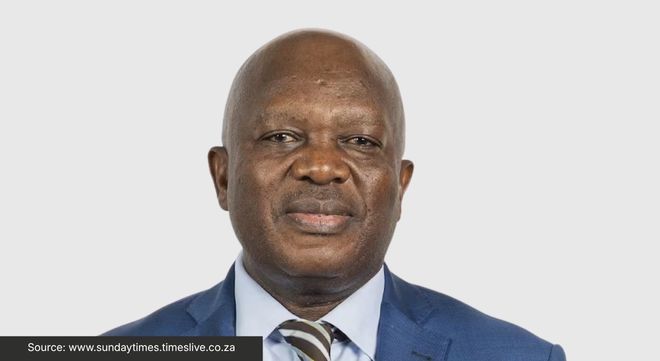
Cabinet on 30 July appointed eight non-executive directors to the PIC board, which is chaired by Deputy Minister in the Presidency for Planning, Monitoring and Evaluation Seiso Mohai (pictured). The appointments were announced after Finance Minister Enoch Godongwana recommended the candidates in consultation with Cabinet.
Welcoming the appointments, the PIC described the new board as “a crucial step to restore corporate governance and institutional stability”, and its immediate priority was to ensure a seamless induction process so that the board could begin its oversight responsibilities without delay.
The board assumes responsibility for an institution that manages about R3.7 trillion on behalf of public-sector retirement funds and other state clients.
The appointments follow the collapse of the previous board. The PIC confirmed that by 24 July all the non-executive directors had resigned. Acting chief executive Batandwa Damoyi and suspended chief executive Patrick Dlamini remain the corporation’s two executive directors, although Dlamini’s precautionary suspension continues. The resignations included former chairperson David Masondo, the Deputy Minister of Finance, whose departure opened the way for Cabinet to designate Mohai as chairperson.
Dlamini has challenged his suspension in the Gauteng High Court, arguing that the board acted unlawfully and procedurally unfairly. Daily Maverick reported that his challenge includes the contention that the power to appoint, discipline, or suspend the PIC chief executive rests with the Minister of Finance as shareholder representative, rather than with the board acting unilaterally.
Board appointed under the 2019 reforms
The eight new non-executive directors are Mohai, Patience Nqetho, Lebogang Mokgabudi, Advocate Gatlelane Ouma Rasethaba, Vivien McMenamim, Moipone Ramoipone, Bajabulile Swazi Tshabalala, and Itani Mafune.
The appointments were made under the Public Investment Corporation Amendment Act, which overhauled the Corporation’s governance framework following the commission of inquiry headed by Judge Lex Mpati.
The Act requires the Minister of Finance to appoint 10 non-executive directors and three executive directors, and to designate either the Deputy Minister of Finance or another deputy minister in the economic cluster as chairperson. It also prescribes representation from National Treasury, the Government Employees Pension Fund, other qualifying depositors, and organised labour.
Organisations including the Organisation Undoing Tax Abuse, the Public Servants Association, and the Democratic Alliance have argued that the statutory requirement for a serving deputy minister to chair the board should be reconsidered in favour of an independent non-executive chairperson, saying this would strengthen the board’s independence.
The Lanseria dispute behind much of the turmoil
The board inherits a controversy that extends well beyond the appointment of new directors. Much of the current scrutiny can be traced to the PIC’s long-running dispute over its settlement with Acapulco Trade and Invest 164.
In 2013, the PIC advanced a loan of R333.2 million to Acapulco to acquire a 25% stake in Lanseria Holdings, the company behind Lanseria Airport. After Acapulco defaulted and the debt reportedly grew to about R600m, the PIC exercised its security over the shares.
The dispute that followed centred on the value of that shareholding.
Business Day and Daily Maverick have reported that an initial valuation by BDO placed the stake at about R238m. Crowe Johannesburg was later appointed to undertake a second valuation. According to those reports, Crowe’s draft valuation was about R550m before its final valuation rose to about R1bn, which formed the basis of an arbitration award. The PIC subsequently paid Acapulco about R411m, followed by a further payment of about R21m.
After becoming chief executive, Dlamini commissioned PwC to investigate the transaction.
According to media reports on a draft PwC forensic report, whose findings were themselves reported to be subject to amendment or withdrawal, the investigation raised concerns about the termination of BDO’s valuation mandate, the appointment of Crowe, the increase between Crowe’s draft and final valuations, and the PIC’s handling of the arbitration. Business Day and Daily Maverick reported that PwC questioned whether income streams had been double counted in the valuation, including rental income that appeared to have been included both in the airport operating-business valuation and in the property valuation. The reports also said PwC criticised aspects of the PIC’s arbitration preparation, including the decision not to call Crowe to give evidence on its valuation.
Following legal consideration of the PwC findings, the PIC referred matters arising from the Acapulco/Lanseria transaction to the Special Investigating Unit for further investigation and any action within its statutory mandate. The PIC said the referral was based on new information identified through the PwC process, despite earlier legal opinions pointing to limited prospects and litigation risks.
Why AGSA became involved
The Lanseria dispute has also had consequences beyond the PIC. The connection lies with Gary Kartsounis, the Crowe Johannesburg partner who led the Lanseria valuation and who is also the engagement partner responsible for AGSA’s external audit.
Following media reports about the valuation and earlier disciplinary findings by the Independent Regulatory Board for Auditors (IRBA) involving Kartsounis in an unrelated audit matter, AGSA’s Audit Committee convened a special meeting to consider whether those developments had implications for AGSA’s own external audit arrangements.
Business Day reported that IRBA fined Kartsounis R400 000, half of which was suspended, after findings relating to audit-quality failures in an unrelated audit matter. The findings related to failures to obtain sufficient appropriate audit evidence and to respond appropriately to misstatements.
AGSA said it had obtained an explanation from Crowe, strengthened oversight of the audit through additional quality reviews, and commissioned an independent assessment. It also emphasised that the IRBA matter was unrelated to the AGSA audit process.
News24 subsequently reported that AGSA’s Audit Committee had found no evidence suggesting that AGSA’s financial statements were misstated or that the external audit opinion had been compromised.
The review is therefore not an investigation into the Lanseria transaction itself, but an assessment of whether developments involving AGSA’s external auditor require any changes to its assurance arrangements. AGSA said it would announce the outcome once its governance and risk assessment processes had been completed.