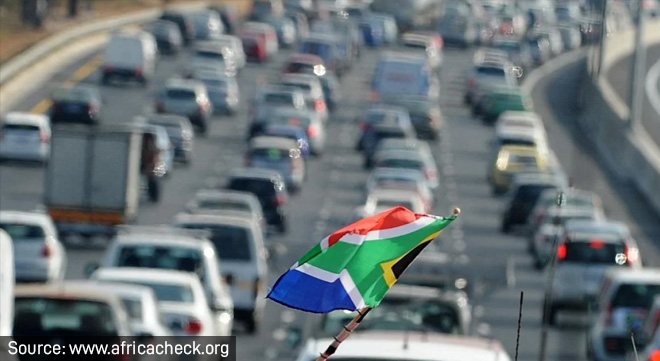
Discovery Insure has released its latest Holiday Drive Trends report, offering a detailed look at South Africa’s festive-season travel patterns and driver behaviour.
The analysis draws on telematics from 200 000 clients and more than 170 million trips recorded over the past three holiday seasons.
Precious Nduli, the chief commercial officer at Discovery Insure, said the volume of data allows the insurer to observe “the rhythm of South Africa’s festive travel with real clarity” and to identify behaviours that increase risk on the country’s busiest routes.
According to the report, the Johannesburg-to-Durban corridor via Harrismith is consistently the most heavily travelled long-distance route among Discovery Insure clients, averaging more than 11 000 trips each festive season.
Other major routes include:
- Cape Town to Saldanha Bay – more than 9 000 trips.
- Johannesburg to Limpopo via Bela-Bela – about 8 000 trips.
- Durban to the South Coast – roughly 6 000 trips.
- Cape Town to George – also about 6 000 trips.
Despite the popularity of coastal travel, the Johannesburg-to-Cape Town route sees comparatively low volumes, with only about 2 500 recorded holiday-season trips.
A review of short-distance trips (under 25km) across major metros shows clear differences in driver behaviour:
- Durban drivers record the highest levels of aggressive behaviour, including the harshest acceleration and speeding events.
- Cape Town drivers are the slowest on average but show the highest number of sharp cornering events.
- Johannesburg drivers display the most distracted driving, with the highest levels of mobile-phone use behind the wheel.
Discovery Insure’s analysis of 2025 data disclose further behavioural differences across demographic groups:
- Men record 22% more harsh acceleration, 43% more sharp cornering, and 25% more speeding than women.
- Women show 15% more phone use and 9% more abrupt braking than men.
- Drivers aged 30 to 35 record the highest levels of speeding and distracted driving.
- Younger drivers aged 20 to 25, although generally more attentive, have higher accident rates linked to limited driving experience.
Discovery Insure found that speeding rises by 23% over the festive season. The time gained is minimal, however: only 2 to 4 minutes per hour.
“Speeding offers almost no benefit in terms of travel time to your holiday destination but dramatically increases the risk of accidents,” Nduli said.
Predictable festive travel peaks
Discovery Insure reports that the national “festive migration” begins steadily between 15 and 24 December, a trend that has remained consistent across the three seasons analysed.
Return-trip traffic peaks sharply on 2 January, which is the busiest travel day of the season. Volumes on this day can reach up to five times the levels observed in mid-January. After 6 January, traffic drops rapidly and settles at about 10% of peak volumes by the middle of the month.
The insurer notes that travelling outside peak periods can reduce both congestion and the likelihood of incidents.