



FST upholds debarment of planner who signed advice records without meeting clients
The planner said his employee performed administrative tasks and denied that the engagements constituted ‘advice’ under the FAIS Act.
The planner said his employee performed administrative tasks and denied that the engagements constituted ‘advice’ under the FAIS Act.

The Tribunal says that even informal communications qualify as regulated advice if they involve financial recommendations.

The Tribunal confirms Assupol’s decision to debar a representative after forensic evidence showed he advised on life policies while unauthorised.

The evidence accumulated by Momentum supported its finding that the agent lacked honesty and integrity.


The Tribunal said allegations of not following sales scripts may breach internal policy but do not in themselves demonstrate dishonesty or a lack of integrity.

Pierre Erasmus said the sanctions were disproportionate, and his dealings with clients were friendships, not formal business relationships.

The client initially swore to non-consent, but in a second affidavit he said drugs clouded his memory, insisting he was present when the policies were initiated.

The FST found that repeated creation of phantom quotes and unauthorised ITC checks breached honesty and integrity standards.

The Tribunal agrees with the Authority that the rule amendment was void because the employer-appointed trustees were asked to leave the meeting during the deliberations.

Polygraph testing alone cannot establish dishonest conduct; where the circumstantial evidence is weak or contradictory, debarment is a disproportionate sanction.

In exchange for their admissions, they sought to substitute their debarments with an undertaking to repay R470m in client losses.

Despite claims of verbal consent from her client, the FST found the adviser’s informal arrangements did not satisfy the requirements for written, explicit authorisation.

After the High Court remitted the matter, a new Tribunal panel deemed the challenge ‘frivolous and vexatious’.

The Tribunal agrees with the FSCA that the entity’s key individual did not ‘come clean’ about her past misconduct.

As a result of the declarator, the High Court ordered the Tribunal to revisit its decision regarding the R50m fine imposed on Viceroy Research.
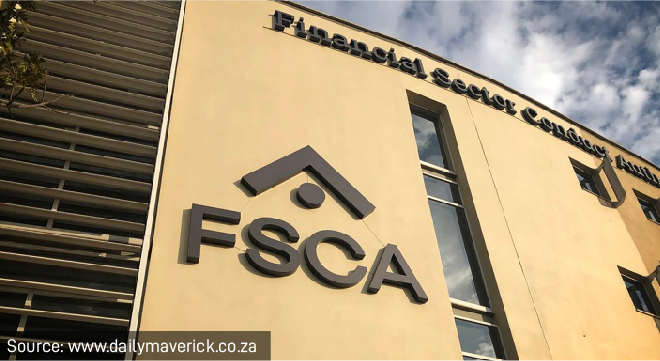
The FSCA records a marked increase in new investigations in 2024/25, particularly those related to unregistered insurance business.

The FSP’s allegations that the representative violated the terms of the settlement and service agreements did constitute a material breach of the FAIS Act.


