



Your face could be the next target in a banking scam
Formal fraud matters closed by the NFO rose 27.5% in the first nine months of 2026, as it warns shoppers about scams targeting their digital banking profiles.
Formal fraud matters closed by the NFO rose 27.5% in the first nine months of 2026, as it warns shoppers about scams targeting their digital banking profiles.

The FSCA’s practical guidance on Joint Standard 2 of 2024 sets out what retirement funds need to do to strengthen cyber resilience, oversee service providers, and prepare for cyber incidents.

Practical steps for FSPs and their clients to spot, verify, and prevent fraud before a compromised email becomes a costly payment.

Social engineering is driving digital banking losses as criminals use convincing impersonation, urgency, and technology to manipulate customers into giving them access to their money.


The reporting framework requires financial institutions to assess materiality promptly and provide regulators with information even while an incident is being investigated.

After concerns over profile hijackings and fraud, SARS says stronger security measures are central to its digital-first tax-filing strategy.

Panellists at the F&I Virtual Summit say most data breaches still begin with staff mistakes, despite growing investment in digital systems and compliance controls.

The bank says its AI-driven banking and fraud prevention systems have reduced fraud on flagged transactions by 85%.

Global shocks may be getting harder to forecast, and the real task is constructing portfolios that can withstand a wider range of outcomes.

Approval of the draft AI policy signals a shift to structured oversight, with businesses urged to prepare for evolving compliance expectations.

Brokers sit at the centre of the digital risk landscape because of the nature of the information they manage and store.

With data breaches costing firms tens of millions per incident, Joint Standard 2 forces financial institutions to strengthen governance, monitoring, and incident response.

While local risk rankings align with global patterns, infrastructure fragility, business interruption, and cybercrime leave SA firms particularly exposed to cascading disruptions.

Small and mid-sized businesses face heightened AI risks, but targeted support from insurers and advisers can help bridge the gap.
The agenda includes the OMNI-Risk Return, COFI, FICA Business Risk Assessments, and practical cyber-resilience guidance.
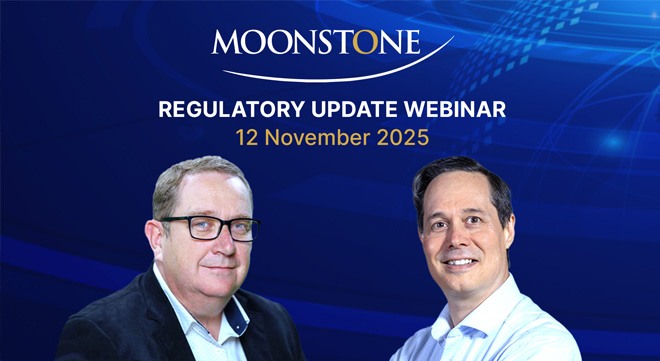
Registration is open for Moonstone Compliance’s Regulatory Update Webinar on 12 November.

Industry experts say that small, unclaimed pots left behind by members pose a growing challenge that must be managed to protect long-term retirement outcomes.