Whether you’re a young woman taking your first step onto the career ladder, or an entrepreneur pouring your soul into a fledgling idea, there’s a truth that can’t be sugar-coated: absolutely no one is coming to save you. We have to save ourselves.
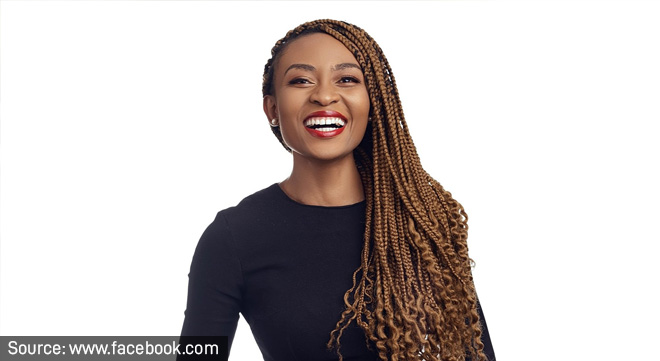
That was the crux of Dineo Lioma’s (pictured) message at PSG Financial Services’ Women’s Day event, “Females of the future”.
Lioma is not one to speak in hypotheticals. She’s a South African engineer, biotech innovator, and entrepreneur with a track record that would be intimidating if it weren’t so inspiring. She’s the founder and chief executive of Docotela, a premium-yet-affordable telehealth company using digital technology to make quality healthcare more accessible across Africa. Before that, she co-founded CapeBio Technologies, the team behind South Africa’s first locally developed Covid-19 test kit, and Incitech, which created a rapid HIV diagnostic device powered by nanotechnology.
But even with that résumé, Lioma knows first-hand the uphill battle faced by women founders in a world where only 7% of venture capital goes to female entrepreneurs in the startup ecosystem.
To illustrate, she painted a picture for the audience. Imagine a young woman who founded three tech companies, earned an engineering degree with 24 distinctions, ranked in the top three of her class, made the dean’s merit list four years running, and holds two master’s degrees – one from one of the top universities in the world.
“That person is me.”
Yet, her first business – a pioneering HIV self-testing device – secured only R500 000 in funding. Her second, mobile testing clinics, managed R2 million. In both cases, she needed 10 times that amount to scale. The gap wasn’t in vision or ability. It was in access to capital.
Lioma’s determination, however, was forged long before her boardroom battles. She recalled being a curious, mischievous child, fascinated by the way things worked – and unafraid to break a few things to find out. There was the time she burned her mother’s carpet experimenting with steam evaporation, and dismantled the family toaster – only to be rewarded with a literal shock of her life.
Back then, she never imagined that access to funding could be the roadblock to turning her dreams into reality. But it was, and still is, for countless women.
The face of wealth in Africa
Scan the latest list of Africa’s wealthiest individuals and the names are instantly recognisable: Aliko Dangote of Nigeria’s Dangote Group; Johann Rupert, the South African luxury goods magnate behind Richemont; Egypt’s Nassef Sawiris, whose fortune is rooted in construction and chemicals; telecom tycoon Mike Adenuga; and mining baron Patrice Motsepe.
It’s a showcase of industrial might and billion-dollar empires built in sectors from cement to retail. But there’s another common thread. Every single person on the top 20 richest Africans list is a man.
“And we also know that wealth just tends to circulate within people around the same network,” says Lioma.
For the third year running, Botswana, Uganda, and Ghana have posted the highest rates of female entrepreneurship in the world, with 38% of women identifying as entrepreneurs – a figure that places Africa ahead of the global average.
“If there are so many women who are self-starters on the continent, why is it that we only get 7% of the venture funding to fulfil our dreams?”
The World Health Organization estimates that women conduct more than 70% of informal cross-border trade in Africa.
“Now, why is it that if we are responsible for creating 70% of this pie, we only get 7% of the resources? That’s something that we really need to think about.”
The African Development Bank puts the shortfall in women’s access to funding at US$45 billion and calculates the cost of excluding women from the economy at US$95bn a year.
But the funding gap tells only part of the story. According to the United Nations, women reinvest 90% of their income into their families and communities, compared with only 35% of men’s income.
“This further highlights the incredible power that we have as a gender in order to uplift Africa as a whole.”
Lioma knows the impact when that power is supported. Starting one of her earlier ventures with only R50 000, she and her team turned it into R1m in revenue and created 50 jobs in six months.
“That’s essentially like taking R1m, giving it to a female entrepreneur, and in six months, that person would have turned it into R20m in revenue and created 300 employment opportunities – or better yet, given that same female entrepreneur R1bn in funding and in six months that person has generated R20bn in revenue and created 300 000 employment opportunities. Now that is a powerful multiplier effect that we as women carry.”
And that, Lioma argues, is why wealth creation in female network groups isn’t just important – it has the power to be transformative.
Breaking down societal biases
From an African perspective, the push for women’s empowerment took on a more economic focus from the year 2000, aligning with global development agendas such as the Millennium Development Goals (2000–2015) and the Sustainable Development Goals (2015–2030).
In the decades since, several African nations have made notable strides. Rwanda, for example, has held the world’s highest percentage of women in parliament since 2003. Legal reforms tackling gender-based violence, strengthening land rights, and improving access to finance have expanded across the continent – although implementation remains inconsistent.
Progress, however, is not the same as parity.
“We still face issues such as access to funding, access to mentoring, and also societal biases,” notes Lioma.
One such bias was illustrated in a Harvard-based study led by Dana Kanze, Lauren Huang, Margaret Conley, and E Tory Higgins (2018), which examined investor questioning patterns at a TechCrunch pitch event.
The findings disclosed a clear gender split: men were typically asked promotion-oriented questions, focused on potential gains and growth (for example, “What are your key milestones this year?”). Women, in contrast, were more often asked prevention-oriented questions, centred on risk and the possibility of failure (such as, “How predictable are your future cash flows?”).
The numbers tell the story. Sixty-seven percent of questions posed to male entrepreneurs were promotion-focused, while 66% of questions to women were prevention-focused. The financial consequences were striking: entrepreneurs who faced mostly prevention questions raised an average of $2.3m, compared with $16.8m for those asked mostly promotion questions – roughly seven times more.
“What this ultimately means is that there’s a lot of negativity that’s focused on the female entrepreneurs with their principal funding … And it just further demonstrates that it’s not about our entrepreneurial competency, but around deep-rooted societal issues that we need to change,” says Lioma.
Building a circle of wealth
Lioma believes the key to closing Africa’s economic gender gap lies in women creating a circle of wealth among women – reinvesting in one another and unlocking an untapped market.
She points to research showing that, particularly in emerging markets, women-led businesses are outperforming those led by men.
“This is definitely a key area that one can look into.”
But it’s not just about numbers. Women bring diverse perspectives and fresh innovation to the table. The data backs this up.
According to a McKinsey & Company’s 2018 report, “Delivering through diversity”, companies with gender-diverse executive teams are 21% more likely to outperform on profitability. This study analysed data from nearly 1 000 companies across 12 countries and found a statistically significant correlation between gender diversity in leadership and financial performance. Specifically, companies in the top quartile for gender diversity on executive teams were 21% more likely to have above-average profitability compared with those in the bottom quartile.
“The numbers speak for themselves. Now it’s just a matter of us acting.”
Being the change
Women in South Africa are already leading in industries traditionally dominated by men, although their names are not as widely known – yet.
Kimberley Taylor founded Loop, a platform that improves delivery logistics through real-time tracking and route optimisation. Aisha Pandor co-founded SweepSouth, an online service connecting homeowners with trusted cleaners while empowering domestic workers. Rapelang Rabana co-founded Yeigo Communications, South Africa’s first free VoIP mobile service, making voice calls over the internet more accessible.
Serisha Barrat co-founded Boardroom App, a secure dating platform verified through LinkedIn and designed for professionals. Tebogo Mokwena leads Akiba Digital, which helps small businesses improve risk management and customer data. Sumarie Greybe co-founded Naked Insurance, the country’s first fully online short-term insurer, offering transparent and flexible policies.
Nneile Nkholise founded iMed Tech, a biotech company creating custom medical devices like prosthetics. Arlene Mulder co-founded WeThinkCode, a coding academy addressing youth unemployment by training software developers. Pelonomi Moiloa leads LeLapa AI, an AI research firm focused on African languages and technology solutions.
“There are so many of us who are doing just amazing things in our own corners of the world, and we just need that support. We need your support,” says Lioma.
Women doing it for themselves
She says support begins by giving these women who are doing it for themselves visibility.
“Whether it’s talking about the incredible work these women are doing on your social platforms or within your networks – whatever it may be – just give women entrepreneurs that visibility.”
Second, Lioma suggests that if you’re recruiting or sourcing for your company or your colleagues, look for opportunities to use women entrepreneurs’ services and empower them by giving them access to markets.
And, of course, funding remains critical.
Lioma says there are few women venture capitalists in South Africa and on the African continent.
“And we know that people tend to invest in others that look like them, and we look like one another … All it takes is powerful women who are driven to make an impact – like those in this room – coming together and deciding to support entrepreneurs like these. That’s all it takes.”