
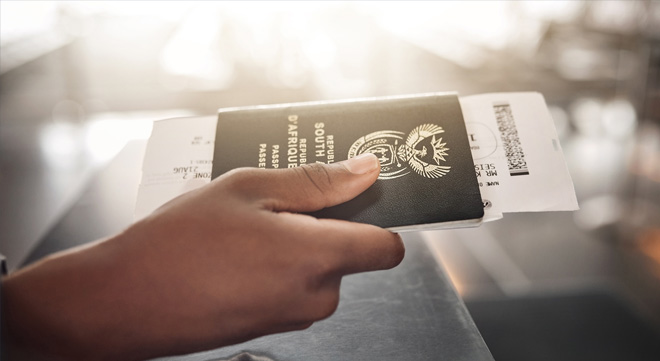
For the first time in the 20-year history of the Henley Passport Index, the United States has dropped out of the world’s Top 10 most powerful passports.
Once unrivalled at No. 1 in 2014, the US passport has now slid to 12th place, tying with Malaysia and offering visa-free access to just 180 of 227 global destinations. The British passport has also reached its lowest-ever position, slipping from 6th to 8th since July – a far cry from its No. 1 ranking in 2015.
Meanwhile, Asia has taken the lead. Singapore has reclaimed the title of the world’s most powerful passport for 2025, with citizens enjoying visa-free access to 195 destinations – the highest on record. It is followed by South Korea (190) and Japan (189), cementing Asia’s dominance in global mobility.
European countries fill most of the remaining top 10 slots, joined by New Zealand, Australia, and Canada. The United Arab Emirates also made impressive gains, rising from 10th to 8th with 184 visa-free destinations.
Among the biggest climbers over the past decade is China, which has leapt from 94th in 2015 to 64th in 2025, adding 37 new visa-free destinations.
Backed by exclusive IATA data, the Henley Passport Index remains the most authoritative global ranking of passport strength, tracking visa-free access across 199 passports and 227 destinations.
How South Africa compares
South Africa holds steady at 53rd place globally for the third consecutive year, granting citizens visa-free access to 102 destinations.
Regionally, South Africa ranks third in Africa, behind Seychelles (26th globally with 155 visa-free destinations) and Mauritius (29th globally with 148 destinations).
It’s followed by Botswana (63rd with 83 destinations), Namibia (68th with 77), Lesotho (69th with 75), eSwatini and Morocco (both 70th with 73), Malawi (71st with 72), and Kenya and Tanzania (both 73rd with 70 visa-free destinations).
A strong passport ranking is more than a travel perk – it reflects a country’s diplomatic standing, economic stability, and global trust. Greater visa-free access boosts business, tourism, and cross-border investment, making it easier for citizens to participate in a connected global economy. Conversely, limited mobility can signal political or economic headwinds, underscoring how a passport’s power often mirrors a nation’s place in the world.

