

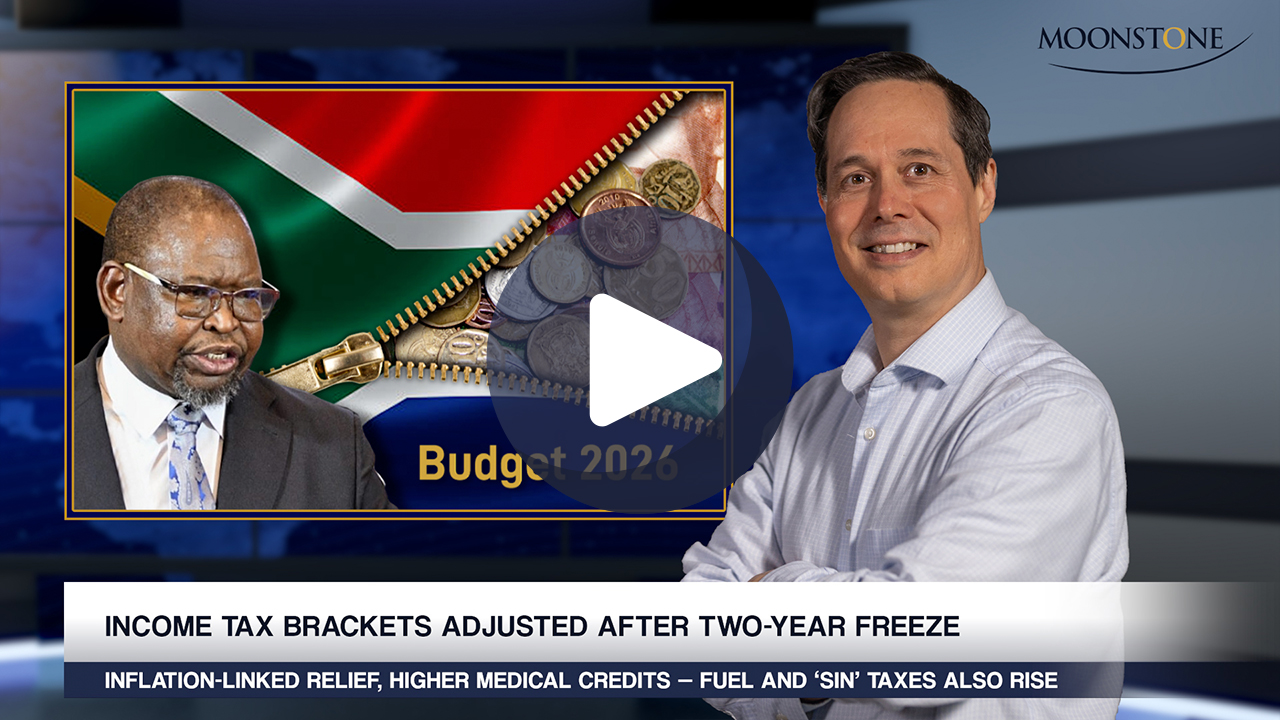

Manager Watch: Strong year, weaker long-term outlook
Alexforbes’ latest survey shows robust 2025 performance but highlights weaker 10-year returns and rising dispersion in equity returns.
Alexforbes’ latest survey shows robust 2025 performance but highlights weaker 10-year returns and rising dispersion in equity returns.

Penalties cannot be based on periods before the FIC assumed supervisory authority, and remediation must be fully considered when imposing sanctions.

The Authority says the case highlights the need for a legislative framework that is more conducive to fostering transformation and incubation models.

Officials outline key supervisory areas affecting financial institutions, with a focus on governance, AML controls, cyber resilience, and consumer-facing risks.


The Authority is studying the influence of financial content on social media, while advancing industry co-ordination as online fraud losses rise.
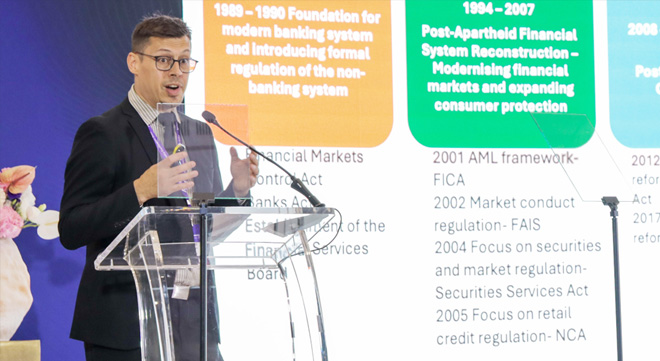
The Authority urges financial firms to assess the likely impact of the COFI framework across governance, licensing, product design, and data.

Unathi Kamlana says regulation must evolve with a more complex, technology-driven financial sector, with greater focus on accountability and customer outcomes.

Converting discretionary savings into retirement vehicles can cut tax on living annuity drawdowns – but may reduce long-term value.


Moonstone Compliance’s analysis identifies recurring shortcomings that FSPs should fix to avoid enforcement action.

Internal directives cannot displace court orders or long-standing principles governing compensation, says the Western Cape High Court.

The case focuses attention on how the exchange control framework applies to crypto platforms that facilitate offshore trading through loans.

John Stopford says future market returns may be shaped by different forces than those of the past decade, with implications for South African assets.

As optimism rises and valuations stretch, there is a shift from broad exposure to disciplined, valuation-driven analysis.

Organisations engaged in litigation to oppose the NHI Act respond to Finance Minister Enoch Godongwana’s appeal for a compromise.

The Bill largely clarifies and strengthens existing AML/CFT expectations rather than introducing a new regulatory philosophy.

Morningstar’s Investment Outlook for 2026 highlights trends in the US and domestic equity markets that it believes advisers and investors should watch.

New enquiries soared in 2024/25, signalling higher public awareness; yet the number of cases opened fell as many matters were settled without the Ombud’s involvement.